logo

Who Is the Best Folding House Manufacturer in China?

A folding house can arrive on a truck and unfold into usable space within hours. Yet a quick setup does not prove lasting quality. Buyers comparing Chinese manufacturers should look beyond polished renders and ask how the frame, hinges, seals, insulation, and electrical systems perform after repeated transport and assembly.

McKinsey’s 2019 report, “Modular construction: From projects to products,” estimates that modular methods can shorten project schedules by 20 to 50 percent. That finding concerns modular construction broadly, not folding houses alone. It offers useful context, but it cannot verify any supplier’s claims. Jan Mischke, a co-author of the report, frames the industry’s challenge as moving “from projects to products.” For folding-house buyers, repeatable factory processes matter—but so do inspection records, material specifications, and clear warranty terms.

The best manufacturer is not automatically the cheapest or the fastest. Ask for dated production photos, test documentation, and references for comparable units. Check whether doors still close cleanly after deployment and whether rainwater drains away from joints. Small details tell a story.

This comparison will assess Chinese suppliers through product design, manufacturing evidence, customization, delivery support, and after-sales service. Some evidence may remain difficult to verify from a distance. That limitation deserves attention, not a confident guess.

Who Is the Best Folding House Manufacturer in China?

What Is a Folding House and Where Is It Used?

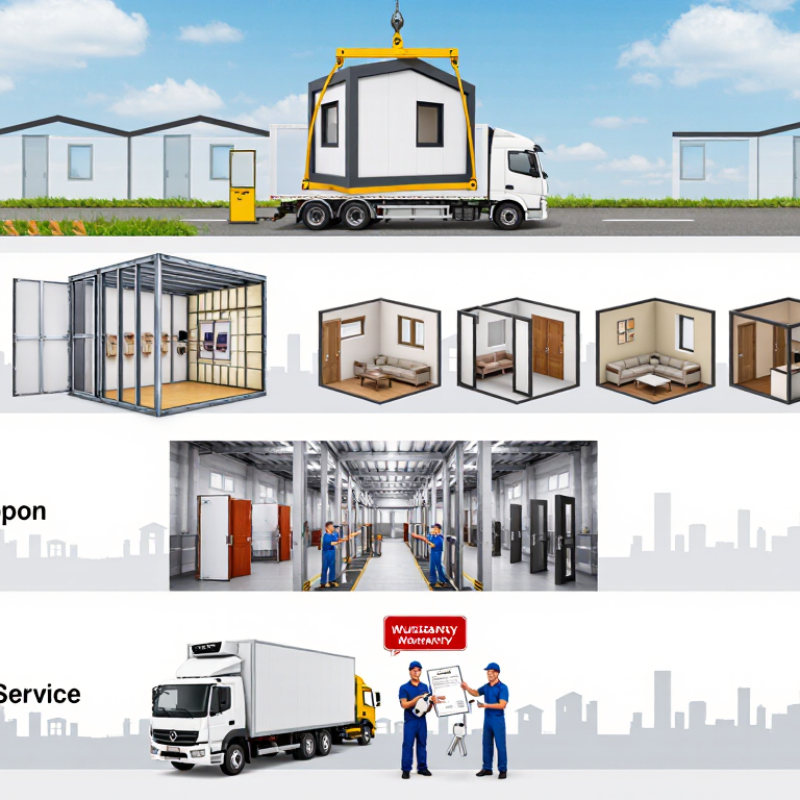
A folding house is a prefabricated building designed to collapse into a compact form for transport. Its wall and roof sections are connected by hinges or engineered joints, then unfolded and secured on site. Some units need a crane or several workers to position them. The exact setup depends on size and design. It is not simply a tent with rigid walls.

These homes can serve as site offices, temporary accommodation, rural workspaces, or small classrooms. A unit might arrive on a truck, then open onto a room with insulated panels, windows, and preinstalled wiring. Plumbing and heating options vary. Check what is included before comparing prices. A clean product photo may not show the ground preparation, lifting equipment, or service connections required.

For buyers comparing manufacturers in China, useful evidence includes structural drawings, material specifications, test documentation, and clear installation instructions. Ask how the design handles local wind, snow, temperature, and moisture conditions. Also check repair access and replacement-part availability. One detail is easy to underestimate: repeated folding can stress joints if the unit is assembled or maintained poorly. A supplier’s claims matter less than verifiable documents and precise answers to practical questions.

Who Is the Best Folding House Manufacturer in China? - What Is a Folding House and Where Is It Used?

Topic Typical facts and specifications Common uses What to check when choosing a manufacturer
What a folding house is A prefabricated modular building designed with components—often wall panels—that fold for transport and open into a usable structure at the site. Designs and folding mechanisms vary. Temporary or relocatable accommodation, workspaces, and support facilities. Ask for drawings showing the folded and deployed configurations, the assembly sequence, and the intended foundation or support requirements.
Transport and deployment Folding can reduce the package size compared with the deployed building, but transport dimensions, weight, and units per shipment depend on the specific design and shipping method. Remote projects, temporary sites, and locations where quick installation or later relocation is useful. Request verified folded dimensions and gross weight, lifting points, transport instructions, and a documented installation procedure. Confirm what equipment and crew are required.
Construction and envelope Products may use a steel frame, insulated wall panels, and sheet-metal or other roof and floor assemblies. Materials, insulation, and finishes differ between models. Site offices, staff facilities, storage areas, and accommodation, subject to the building’s design and local approval. Check material specifications, insulation details, corrosion protection, weather sealing, and documentation for structural and fire performance where required.
Construction and infrastructure sites A modular unit can be configured as a workspace or support room; plumbing, electrical systems, and interior fit-out are model- and project-dependent. Project offices, worker welfare rooms, changing areas, and temporary accommodation. Confirm the supplied scope, utility connection points, electrical standards, ventilation, sanitation provisions, and compatibility with site conditions.
Emergency and temporary facilities A relocatable prefabricated building may support temporary shelter or services, but suitability depends on capacity, site conditions, approvals, and the specified performance level. Temporary accommodation, field support, and short-term community or operational facilities. Evaluate occupancy layout, access and egress, sanitation, ventilation, local code compliance, and the supplier’s ability to provide replacement parts and technical support.
How to identify a suitable manufacturer There is no single manufacturer that is best for every project. The right choice depends on the required design, destination, compliance needs, budget, and delivery plan. Any project comparing folding buildings for purchase, rental, or deployment. Compare itemized quotations, approved drawings, test and compliance documents, production quality controls, warranty terms, lead time, packaging, and after-sales service.

Specifications and permitted uses vary by product, project, and local regulations. Verify all dimensions, performance claims, and compliance documents with the manufacturer before ordering.

How to Evaluate Folding House Manufacturers in China

Who Is the Best Folding House Manufacturer in China?

How to Evaluate Folding House Manufacturers in China

Choosing a folding house manufacturer takes more than comparing prices. Ask for factory inspection records, material specifications, and drawings that show wall, roof, and connection details. Check how the company tests repeated folding, water leakage, and corrosion protection. A neat showroom is useful, but it cannot replace production evidence.

McKinsey’s 2019 report, Modular construction: From projects to products, estimated modular methods could shorten project schedules by 20–50%. Treat that as an industry benchmark, not a folding-house guarantee. Transport, foundations, and local installation can change the result. Request a sample unit or documented test results, and confirm that the proposed design meets requirements at its intended destination. Compare warranty coverage, spare-part availability, packaging, and delivery milestones. Small omissions matter.

Tips: Ask for a live video tour of the factory. Match the quotation against the same specifications. Check references for completed projects, not just renderings. If a promise sounds unusually precise, ask how it was measured. I would still verify details independently.

Who Is the Best Folding House Manufacturer in China?

How to Evaluate Folding House Manufacturers in China

Use these suggested evaluation weights to compare manufacturers consistently. They are a procurement framework, not survey results or rankings of specific companies.

Prioritize verified structural and material specifications, documented quality controls, and compliance with the standards required in your destination market. Confirm all claims with project-specific documentation and references.

Which Manufacturers Offer Strong Product and Service Capabilities?

A capable folding house manufacturer in China should demonstrate more than a tidy showroom. Ask for drawings that show the folded dimensions, connection points, insulation layers, and lifting locations. Then compare them with the finished unit, not just a brochure image.

Small details matter. Check door alignment, floor seams, and how rainwater drains from the roof. These visible features can reveal careful production, though one sample cannot prove every unit will match.

Service capability is equally important. Request a clear production schedule, inspection records, and written details about packaging and replacement parts. Ask who handles technical questions after delivery and how quickly they usually respond.

Good communication counts. A useful supplier explains limits instead of promising that every layout works everywhere.

Still, paperwork can look reassuring while practical support remains uncertain. I would compare the answers against a sample order or a documented quality check before making a large commitment. That extra step takes time, but it can expose gaps in fit, finish, or after-sales planning.

How Do Quality, Compliance, and Delivery Compare?

Choosing the best folding house manufacturer in China requires more than comparing quoted prices. Quality shows in practical details: frame welds, panel alignment, sealant continuity, and doors that open smoothly. Ask for material specifications, inspection records, and photographs of finished units before shipment. A factory visit or independent inspection can help confirm whether sample quality matches routine production. Small gaps matter. After heavy rain, weak seals may leave damp corners, even when a unit looks polished indoors.

Compliance should be checked against the destination market and the project’s intended use. Request applicable test reports, electrical documentation, fire-performance information, and clear product labels. Verify that the documents match the exact model being ordered, not a similar-looking unit. Delivery depends on more than production speed. Confirm drawings, customization limits, packing methods, loading plans, and realistic dispatch dates in writing. Ask how missing parts or transit damage are handled, including who pays for replacement shipping. A quick promise is not a schedule. Ports, weather, and late design changes can still cause delays, so allow some time for the unexpected.

How to Choose the Best Manufacturer for Your Project?

Choosing a folding house manufacturer starts with your site, not a catalogue. Ask for drawings that specify steel thickness, connection details, insulation, and roof drainage. Then check whether the proposed design accounts for your local wind, snow, and seismic conditions. Requirements vary by location, so request documented calculations and have a qualified local professional review them. A low quote means little if the floor flexes or rainwater pools beside a doorway.

Factory production can improve consistency, but only when quality checks are visible. McKinsey’s 2017 construction productivity report found that construction productivity grew about 1% annually over two decades, compared with 3.6% in manufacturing. That gap makes factory controls worth examining, not assuming. Ask for inspection records, material traceability, and photographs of hidden connections before wall panels are closed. Evidence matters. I would not treat a polished sample room as proof; it cannot show how joints perform after repeated folding.

Compare delivery scope as carefully as price: foundation requirements, transport dimensions, installation time, spare parts, and warranty exclusions. McKinsey’s 2019 modular-construction report estimated that modular methods could shorten project schedules by 20–50%, but results depend on design and site coordination. Ask the manufacturer for a project schedule with named milestones and realistic weather allowances. Request references for buildings used in conditions similar to yours. Ask for proof. A missed detail—such as a door seal that traps water—can become an expensive lesson.