logo

How to Buy Folding Homes in 2026?

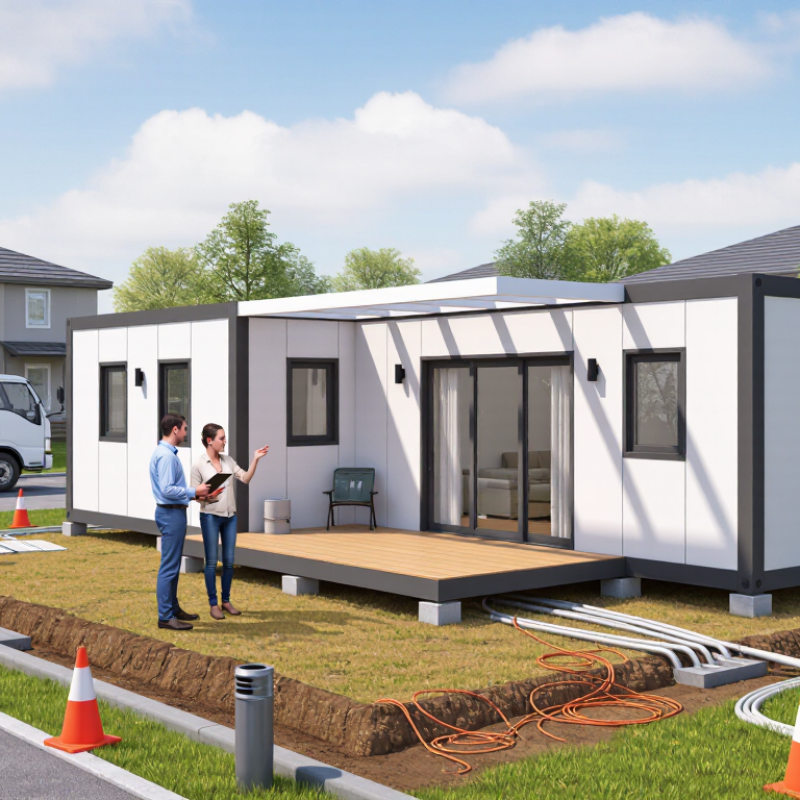
Buying folding homes in 2026 may look simple in online videos. A compact unit arrives folded, unfolds on prepared land, and quickly resembles a finished house. The reality is less dramatic. Buyers must examine transport routes, foundation requirements, utility connections, local permits, and weather performance before paying a deposit. A beautiful showroom model can hide expensive site work.

This guide explains how to compare folding homes with practical judgment. It considers manufacturer experience, engineering documents, material quality, insulation ratings, fire safety, and after-sales support. Ask for itemized pricing, delivery limits, warranty terms, and references from completed projects. Visit a factory or an occupied home when possible. Touch the wall panels. Check door alignment. Listen for clear answers about repairs.

Details matter.

Financing also deserves careful attention in 2026. Some lenders may treat folding homes differently from conventional properties, especially when the structure is manufactured off-site. Confirm ownership requirements, insurance availability, land restrictions, and installation responsibilities before signing. Independent inspections can reveal weak seals, moisture risks, or incomplete finishes. They cost money, but missed defects cost more.

The term “folding” can sound futuristic, yet not every product offers the same durability or convenience. Marketing claims may be incomplete. A reliable decision balances speed, budget, comfort, and long-term maintenance. This article will help readers create a realistic buying checklist, compare credible suppliers, and recognize when an attractive deal needs more questions. The process is not flawless. Careful reflection remains part of the purchase.

How to Buy Folding Homes in 2026?

Define Folding Homes: Modular, Manufactured, and ICC-Code Classifications

How to Buy Folding Homes in 2026?

“Folding home” is usually a marketing phrase, not a legal building classification. A modular home is factory-built, transported in sections, and completed under state or local building codes. A manufactured home follows the federal HUD Code and often uses a permanent chassis. Panelized or foldable units may fit either category, depending on design and approval. The 2024 ICC International Residential Code and International Building Code help determine structural, fire, energy, and installation requirements. Ask for the exact certificate, not a sales description.

Data matters. The U.S. Census Bureau’s Manufactured Housing Survey recorded roughly 89,500 manufactured-home placements in 2023. That figure shows continued demand, but it does not prove every folding design is financeable or permitted. Review the factory inspection record, engineering drawings, wind and snow-load ratings, transport plan, foundation details, and utility connection costs. The U.S. Department of Housing and Urban Development separates manufactured homes from locally code-approved modular construction. Mixing these categories can create expensive delays. I would also inspect a completed unit during rain. Photos rarely reveal drainage weaknesses.

Tips: Confirm zoning before paying a deposit. Request written approval from the local building department. Compare the delivered price with site preparation, crane work, permits, taxes, and foundation costs. Check doors, seams, flooring, and plumbing personally. Some claims sound precise but remain incomplete. Use an independent inspector and a qualified lender familiar with factory-built housing.
Verify 2026 Zoning, Permits, and HUD Code 24 CFR 3280 Compliance

How to Buy Folding Homes in 2026?

Verify 2026 Zoning, Permits, and HUD Code 24 CFR 3280 Compliance

Buying a folding home in 2026 requires more than checking floor plans and delivery costs. Confirm how your local authority classifies the structure. It may be treated as a manufactured home, modular building, or temporary unit. The classification affects zoning, permits, taxes, and inspections.

Call the planning department before paying a deposit. Ask for written confirmation of permitted use, setbacks, height limits, foundation rules, parking, and utility connections. Request the current 2026 zoning text, not an outdated webpage. Check flood, wildfire, wind, and snow-load requirements for the exact parcel. Small details matter.

Compliance needs careful checking. A manufactured home should meet applicable HUD construction and safety standards under 24 CFR Part 3280. Ask for certification labels, approved plans, engineering documents, and records for electrical, plumbing, structural, and fire-safety systems. The code label alone may not prove that the home is approved for your site. Installation, foundation, transport, and local inspections can involve separate requirements.

Walk through the paperwork slowly. Compare the delivered design with the approved drawings. Confirm who obtains permits and who pays inspection fees. Get utility approvals before delivery. I would not rely on a salesperson’s verbal assurance; that shortcut can become expensive. My own weak point would be assuming “folding” means “exempt.” It does not. Rules can differ between neighboring counties. Keep every email, drawing, permit, and inspection report in one dated file.

Compare Prices Using NAHB Construction-Cost Data and Total-Land Budgets

How to Buy Folding Homes in 2026?

A folding home needs more than a factory price. Start with a total-land budget. NAHB’s 2024 Cost of Constructing a Home Survey reported an average construction cost of $428,215, or about $162 per square foot. The same survey placed the finished lot at $91,057, representing 13.7% of the final sales price. These figures describe typical site-built homes, not folding units. Still, they offer a useful planning benchmark.

Add land, transport, foundation work, permits, utility connections, site grading, and local taxes. A $120,000 folding unit can become a $210,000 project after delivery and preparation. Rural land may look cheaper, but long power or water connections can change the calculation quickly. The U.S. Census Bureau’s housing data also shows wide regional differences in new-home prices. Location matters more than many online listings suggest.

Tips: Request a written cost sheet with every exclusion. Ask who pays for the crane, road access, and foundation inspection. Compare the unit cost per finished square foot, not the advertised shell price. Keep a 10% to 15% contingency reserve. That may still be too low on difficult land. Visit the site after heavy rain, if possible. A dry viewing can hide drainage problems, and I have seen budgets fail there. Use NAHB data as a benchmark, then confirm local prices with licensed contractors and planning offices.

How to Buy Folding Homes in 2026? - Compare Prices Using NAHB Construction-Cost Data and Total-Land Budgets

Planning Case Floor Area
(sq. ft.)
Construction Rate
($/sq. ft.)
Estimated Construction
($)
Land Budget
($)
Site & Utility Allowance
($)
Permits & Professional Fees
($)
Contingency
($)
Estimated Total Budget
($)
National benchmark reference 2,411 $162 $428,215 $91,057 Included in survey total Included in survey total Not separately reported $519,272*
Compact folding home 600 $162 $97,200 $75,000 $14,580 $9,720 $9,720 $206,220
Small two-bedroom folding home 800 $162 $129,600 $100,000 $19,440 $12,960 $12,960 $275,000
Family-size folding home 1,200 $162 $194,400 $125,000 $29,160 $19,440 $19,440 $387,440
Large family folding home 1,600 $162 $259,200 $150,000 $38,880 $25,920 $25,920 $499,920
Premium-size folding home 2,000 $162 $324,000 $200,000 $48,600 $32,400 $32,400 $637,400
Calculation basis: The $162 per-square-foot construction rate and the 2,411-square-foot national reference are based on a recent national single-family construction-cost survey. Folding-home scenarios apply that benchmark to comparable finished floor areas. Site and utility costs are modeled at 15% of construction cost, permits and professional fees at 10%, and contingency at 10%. Land figures are planning allowances rather than national land-price averages.
*Reference total: $519,272 equals the national construction benchmark of $428,215 plus the reported finished-lot cost of $91,057. Actual 2026 prices may vary according to local labor, transportation, foundation requirements, zoning, utility connections, taxes, site conditions, and the home's included specifications.

Evaluate Energy Performance Against DOE Zero Energy Ready Home Standards

How to Buy Folding Homes in 2026?

Evaluate Energy Performance Against DOE Zero Energy Ready Home Standards

Buying a folding home in 2026 requires more than checking its folded dimensions and delivery price. Ask for energy documents before signing. A qualified evaluator should compare the home with current DOE Zero Energy Ready Home requirements, not a vague “green” claim. These requirements address insulation, air sealing, windows, heating and cooling efficiency, water heating, ventilation, lighting, and appliance performance. The exact checklist may change, so confirm the applicable program version.

Request blower-door results, duct-leakage measurements, insulation R-values, and equipment data. Look for a continuous air barrier around wall, roof, and floor assemblies. Inspect how factory joints are sealed after unfolding. Small gaps near corners can undermine an otherwise strong design. A heat-recovery ventilator may improve indoor air quality, but only when installed, balanced, and maintained correctly.

Solar readiness matters, but panels alone do not prove efficient construction. Compare estimated annual energy use with local climate data and utility rates. Ask whether the estimate includes transportation, foundations, skirting, and final connections. These details are often overlooked. I would also arrange an independent inspection after assembly. Factory precision helps, yet field work can introduce mistakes. No certificate replaces careful questions, clear records, and a realistic operating budget.

Inspect Delivery, Installation, and Warranty Terms Under State Building Rules

How to Buy Folding Homes in 2026?

A folding home is not automatically approved because it leaves a factory. Ask whether your unit is classified as a modular, manufactured, or site-built structure. The distinction affects permits, inspections, foundation rules, and utility approvals. State building departments may require compliance with adopted residential codes, wind zones, snow loads, energy standards, and local zoning. The 2024 International Code Council off-site construction guidance stresses early coordination between factory, authority, and site professionals.

Delivery deserves a written inspection plan. Request transport dimensions, route surveys, crane requirements, unloading limits, and weather procedures. Check panels, hinges, windows, seals, and plumbing connections before installation. Take dated photographs. The Modular Building Institute’s 2024 industry reporting highlights schedule efficiency as a major off-site construction benefit, but transport damage can erase that advantage quickly. The promise sounds neat.

Before signing, match the warranty with state inspection responsibilities. Identify who covers factory defects, installation errors, water intrusion, structural movement, appliances, and damaged finishes. Ask whether labor, travel, removal, and replacement are included. Warranty periods may differ by component. Do not accept “standard coverage” without the actual document. A 2023 Dodge Construction Network SmartMarket report found that many contractors expect greater modular use, yet coordination remains a common challenge. I would also obtain an independent inspection after installation. Factory quality does not prove site quality. Recheck the final certificate, utility sign-offs, and every unresolved repair in writing.