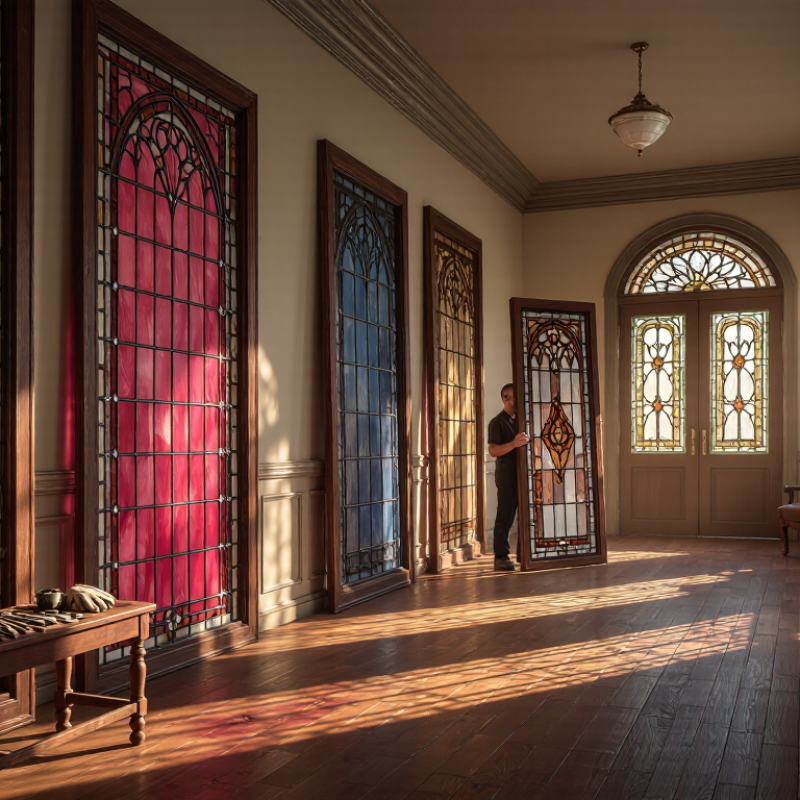
| Visual character | Hand-crafted glass may include subtle variations in color, texture, thickness, and lead lines. | Adds depth, historical character, and a distinctive focal point to a room. | Measure the opening carefully and design the surrounding frame to complement irregularities rather than forcing the panel into place. |
| Light transmission | Clear, opalescent, textured, and colored glass transmit different amounts and qualities of daylight. | Can provide privacy while retaining natural light. | Check the panel at different times of day before final placement, especially when used near a window or exterior door. |
| Panel condition | Possible conditions include intact glass, hairline cracks, bowed sections, weakened lead came, or loose cement. | A condition assessment helps prevent avoidable damage during installation. | Inspect both sides before handling. Do not lift a fragile panel by one corner or by individual lead lines. |
| Recommended support | Stained glass should be supported by a stable frame, stops, or a purpose-built secondary glazing system. | Reduces stress caused by movement, vibration, and the panel's own weight. | Use continuous edge support. Avoid relying on adhesive, unsupported putty, or point fasteners alone. |
| Thermal and moisture exposure | Rapid temperature changes, condensation, and water penetration can accelerate deterioration of old materials. | Proper separation from weather exposure helps preserve the panel. | For exterior openings, consider protective glazing or an internally ventilated system installed by a qualified professional. |
| Cleaning method | Dust and surface grime are best removed with gentle, low-moisture cleaning. | Minimizes the risk of damaging paint, patina, came, or deteriorated joints. | Use a soft brush or lint-free cloth. Apply a small amount of mild, pH-neutral cleaner to the cloth rather than spraying the panel directly. |
| Cleaning frequency | Indoor panels commonly need dust removal every 1–3 months, depending on room conditions. | Regular light cleaning avoids the need for aggressive scrubbing. | Clean more frequently in kitchens, entryways, or rooms with smoke and airborne grease. |
| Inspection schedule | A visual inspection every 6–12 months is a practical preventive-maintenance interval. | Early detection can limit the scope and cost of repairs. | Look for bowing, new cracks, loose came, open joints, rattling, corrosion, or water marks. |
| Handling precautions | Old glass and leaded assemblies may be more vulnerable than newly fabricated panels. | Careful handling lowers the chance of cracks and deformation. | Wear cut-resistant gloves, keep the panel upright during transport, and use two people for large or unstable panels. |
| Professional restoration | Complex repairs may involve releading, glass replacement, stabilization, or protective glazing. | Preserves original material while improving structural stability. | Consult a stained-glass conservator or experienced restorer when the panel is bowed, cracked, loose, or historically significant. |


 Your message must be between 20-3,000 characters!