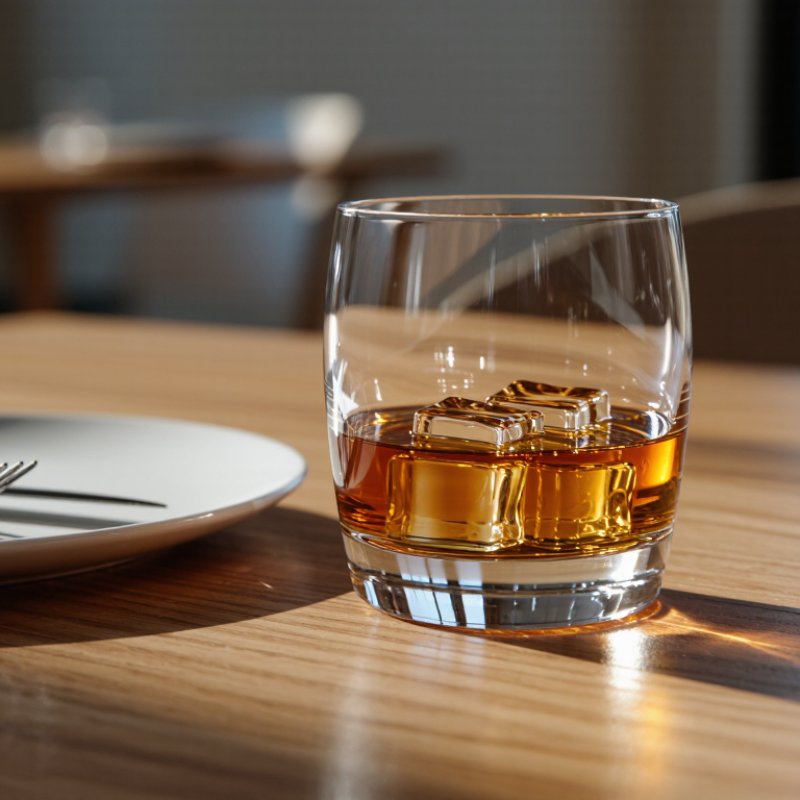
A Short Tumbler Glass is a low-sided drinking glass, often chosen for spirits served neat or over ice. It also suits classic cocktails, water, juice, and other everyday drinks. Its broad opening makes adding ice simple. The sturdy base feels reassuring in the hand, though it can take up more shelf space than a tall glass. Small details matter.
The International Bartenders Association’s official cocktail specifications pair an old-fashioned glass with drinks such as the Old Fashioned. That gives bartenders a practical reference for familiar serves, not a rule for every home or bar. Industry reports offer a different kind of context. IWSR’s beverage-alcohol market analysis tracks categories such as spirits, while the National Restaurant Association’s State of the Restaurant Industry report examines restaurant trends. Neither establishes one required glass shape or universal serving size. That distinction is worth keeping in mind.
This guide explores what a Short Tumbler Glass is used for, how its shape affects serving and handling, and when another glass may work better. Expect examples: clear ice shifting in a whiskey pour, or a short cocktail resting beside a plate. A tumbler is versatile, but not magical. Its low profile can make fizzy drinks lose their sparkle sooner, and its wide rim may not suit every aromatic drink. The right choice depends on the beverage, the setting, and personal preference. Sometimes, the simplest glass is simply the one that feels right.
Definition and Design: What Distinguishes a Short Tumbler Glass?
A short tumbler is a low, straight-sided drinking glass, usually with a broad opening and a sturdy base. Its compact height distinguishes it from tall, narrow glasses. The shape feels balanced in the hand and sits steadily on a table. A thick bottom may add weight, though it also leaves less room for liquid. Small detail, noticeable difference.
The wide rim makes a short tumbler suitable for water, juice, soft drinks, and drinks served over ice. It gives room for ice cubes and makes pouring straightforward. The open top also lets aromas reach the nose, which can matter when sipping a carefully prepared drink. Capacity varies by design, so “short” describes the profile more than a fixed volume. Some glasses have gently curved sides; others keep a clean cylinder. Both work, but the straighter shape can feel a little plain. That is a real trade-off: practical, easy to stack, yet less distinctive on a dressed table. A short tumbler is defined less by one exact measurement than by its low silhouette, stable base, and versatile open rim.
Capacity and Proportion: Matching Glass Size to a Short Drink
A short tumbler is sized for drinks served in a compact portion, rather than a tall pour with lots of mixer. Many hold roughly 180 to 300 millilitres, though usable capacity depends on the glass shape. A drink should leave room for ice and a little space below the rim. That makes it easier to lift and sip without sloshing.
Proportion matters. A spirit-forward cocktail may contain only 60 to 90 millilitres of liquid, but a large ice cube takes up considerable space. In a smaller glass, the drink looks balanced and stays within easy reach of the nose, where its aroma is easier to notice. With several smaller cubes, expect faster chilling and dilution. The same recipe can feel different.
For a neat pour, a broad base gives the glass a steady feel on a table. For a mixed short drink, check the liquid volume before choosing the glass; a crowded rim can make even a well-made drink awkward to handle. I sometimes find a glass that looks elegant is simply too wide for a modest pour. Appearance helps, but proportion is more useful.
Cocktail Use: The IBA Old Fashioned’s 45 mL Spirit Measure
In the IBA Old Fashioned, the standard spirit measure is 45 mL of whiskey. A short tumbler holds the finished drink, but it is not a measuring tool. Use a jigger or another marked measure to pour the spirit accurately. That small distinction matters. Too much whiskey can overpower the sugar and bitters; too little may leave the drink tasting thin.
The recipe is built directly in the glass, usually with sugar, bitters, a little water, and ice. Stirring helps dissolve the sugar and chill the liquid. A large ice cube melts more slowly than several small cubes, though it still adds water over time. The 45 mL measure refers to the spirit, not the total drink. The final volume changes as ingredients combine and ice begins to melt.
A short tumbler gives room for stirring and a comfortable grip, while keeping the drink easy to serve over ice. Measure it carefully. Glass size varies, so judging the pour by how full the tumbler looks can be misleading. That is easy to forget. The IBA specification offers a clear starting point, but small differences in sugar or dilution can change the balance, so tasting and adjusting gently still has value.
Serving Beyond Cocktails: Water, Juice, and Other Everyday Drinks
What Is a Short Tumbler Glass Used For?
A short tumbler is useful well beyond cocktails. Its low, stable shape suits everyday drinks like water, juice, iced tea, and milk. The wide opening makes it easy to add ice or a lemon slice, while the compact size fits comfortably in many hands. A glass of cold water beside a plate of toast feels just as at home in one as a small juice at breakfast.
Capacity varies, so check the glass size before serving guests or filling it with ice. A smaller tumbler may leave little room for both ice and a full pour. The broad rim is convenient for sipping, though it can also let cold drinks warm faster than a narrower vessel. A tumbler is practical, not perfect. Glass can chip if knocked against a hard sink, so handle it with care and follow any care instructions.
Tips: For juice, pour slowly to avoid splashes. For water, add a few ice cubes rather than filling the glass with them. Keep a spare nearby; everyday glasses have a way of disappearing into the dishwasher.
What Is a Short Tumbler Glass Used For?
A 10 fl oz short tumbler can serve water, juice, soda, or a mixed drink. These example pours show how much of the glass each drink fills; actual serving sizes vary.
Example pour volumes: water 8 fl oz, juice 6 fl oz, soda 8 fl oz, and a mixed drink 6 fl oz. A short tumbler is versatile for everyday drinks as well as cocktails.
Ice, Temperature, and Handling: Practical Factors in Short-Glass Service
A short tumbler works well when a drink needs room for ice and a low, steady glass. Its wide opening makes adding cubes easy, but it also exposes more liquid to warm air. Ice size matters: one large cube often melts more slowly than several small pieces. Still, room temperature and the drink’s starting temperature affect the result. A chilled glass may buy a little time. Not much.
Leave space near the rim so the glass is easier to carry without sloshing. A low center of gravity helps, though a wet base can still slide on a polished table. Condensation also makes the sides slick, so hold the glass around its lower half rather than pinching the rim. For fizzy drinks, pour gently over ice to limit foaming. These habits sound obvious, yet they are easy to forget during busy service. Glass thickness varies, too, so cooling times are not perfectly predictable. Check the drink rather than relying on a fixed rule.