logo

Top China Aluminum Composite Panel Manufacturers

Choosing among the top China Aluminum Composite Panel manufacturers requires more than comparing prices or polished catalog images. This guide examines practical evidence behind each supplier, including factory capability, panel construction, coating quality, fire performance, and quality-control procedures. We consider manufacturers serving architectural, commercial, signage, and interior projects. Their experience may appear in completed buildings, export records, technical teams, and repeat customer relationships.

Details matter.

A dependable manufacturer should explain core thickness, aluminum skin gauge, coating system, surface flatness, and installation requirements. Independent testing, traceable production records, and clear warranty terms also deserve attention. Samples can reveal uneven color, weak bonding, exposed edges, or inconsistent protective film before a large order is placed. This is where professional judgment becomes useful. Brochures rarely show every limitation.

No ranking is perfect. Product ranges change, certifications expire, and factory performance can vary between batches. Some suppliers communicate strongly but provide limited technical proof. Others may offer excellent production skills yet present outdated websites. That gap deserves careful review. We therefore encourage buyers to request current test reports, recent project references, sample panels, and written responses from technical staff. These steps cannot remove every risk, but they create a more reliable comparison. The manufacturers discussed here are assessed through practical purchasing concerns, not advertising language alone. For architects, contractors, distributors, and project owners, the goal is a clearer decision based on verified details, realistic expectations, and long-term performance.

Top China Aluminum Composite Panel Manufacturers

Aluminum Composite Panels: Structure, Types, and Main Applications

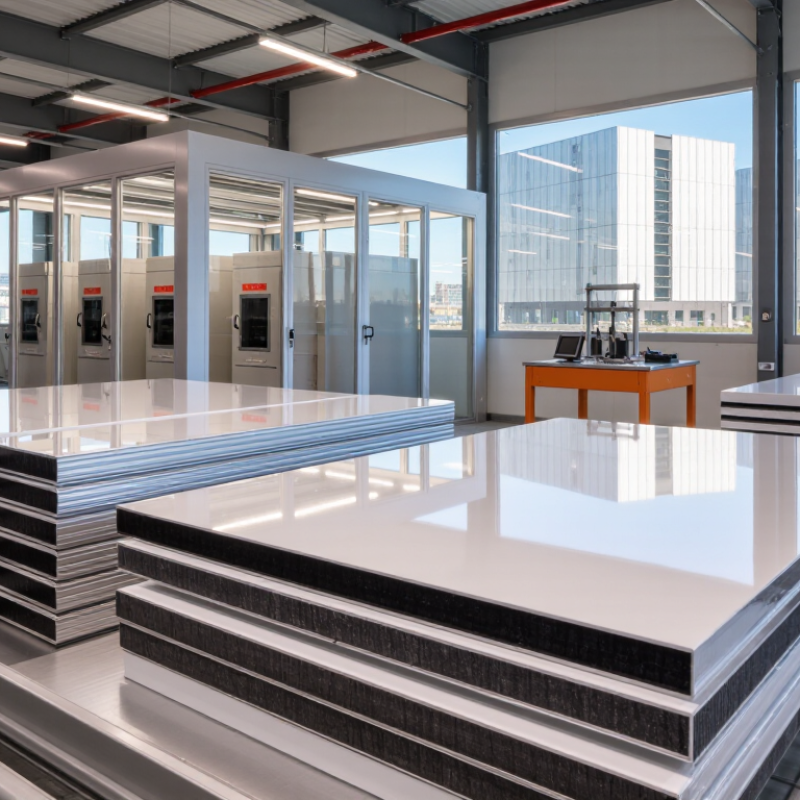
Aluminum composite panels consist of two thin aluminum sheets bonded to a lightweight core. The core may contain polyethylene or mineral-based material, depending on fire-performance requirements. This layered structure creates a rigid, flat panel with less weight than solid aluminum. It also supports clean cutting, routing, bending, and cassette fabrication on construction sites.

Common panel types include standard architectural panels, fire-rated panels, and panels with anodized or coated surfaces. Coating quality affects color stability, scratch resistance, and long-term maintenance. In coastal projects, installers should examine corrosion protection carefully. A small edge defect can allow moisture to enter. That detail is easy to miss.

These panels appear on building facades, entrance canopies, shopfronts, balcony screens, and interior wall systems. They also suit signage and decorative columns because large sheets create consistent visual lines. Experienced buyers check flatness, coating thickness, core composition, and test documentation before selecting a manufacturer. Installation matters just as much. Incorrect joint spacing can cause buckling during hot weather, while poor sealing may create water paths. Panels are efficient, but not flawless. Their performance depends on design, fabrication, handling, and regular inspection.

How China’s ACP Manufacturing Industry Is Organized

Top China Aluminum Composite Panel Manufacturers

How China’s ACP Manufacturing Industry Is Organized

China’s aluminum composite panel industry operates through connected manufacturing clusters rather than isolated factories. Many plants source aluminum coils, polymer cores, coatings, and protective films from nearby suppliers. This shortens delivery times and allows production lines to respond quickly to project specifications.

Manufacturers usually specialize in different stages. Some focus on coil coating and surface finishing. Others produce fire-resistant cores, assemble panels, or provide cutting and fabrication services. Large facilities may combine these operations under one roof. Smaller factories often depend on regional partners. This structure can reduce costs, but it may also make quality control less consistent.

A reliable manufacturer normally maintains batch records, incoming material checks, and finished-panel testing. Inspectors may measure thickness, coating adhesion, color variation, peel strength, and fire performance. Export departments then coordinate packaging, documentation, and container loading. Details matter here. A damaged protective film can create installation problems months later.

The industry is capable, but it is not flawless. Some production data remains difficult to verify independently. Buyers should request recent test reports, production photos, sample panels, and clear tolerances before ordering. Factory visits can reveal practical issues, such as dusty storage areas or uneven stacking. Those observations often matter more than polished brochures.

Key Criteria for Evaluating Chinese ACP Manufacturers

Choosing among top China aluminum composite panel manufacturers requires more than comparing online prices. A reliable evaluation begins with factory evidence, not polished brochures. Ask for production photos, inspection records, and recent project references. A site visit can reveal storage conditions, mixing areas, and whether quality checks happen consistently.

Material specifications deserve close attention. Verify aluminum skin thickness, alloy grade, coating type, core composition, and panel dimensions. Independent test reports should support fire performance, weather resistance, adhesion, and color stability claims. Request production samples from different batches. Samples reveal reality. Check flatness, edge quality, coating uniformity, and protective film adhesion under normal handling. One sample may look excellent, but it cannot represent every shipment.

Experienced manufacturers usually explain tolerances, packaging methods, lead times, and corrective procedures clearly. Their technical team should answer practical questions without avoiding uncomfortable details. Communication quality matters when drawings change or installation problems appear. Export experience is useful, but it should include documented quality control rather than impressive destination lists. Confirm whether inspections occur before, during, and after production. Also review payment terms, warranty language, and replacement procedures carefully. A lower quotation may hide thinner skins, weaker cores, or inconsistent coating thickness. I would still leave room for doubt. Even a well-organized supplier can make mistakes, especially during rushed production. Independent pre-shipment inspection adds another layer of confidence.

Leading China Aluminum Composite Panel Manufacturers by Specialty

China’s aluminum composite panel manufacturers often serve different project needs, not one universal market. Some specialize in fire-rated panels for transport hubs, hospitals, and high-rise buildings. Others focus on exterior cladding with strong weather resistance and stable color retention. Interior specialists usually provide lighter panels, precise finishes, and easier cutting for retail walls or ceilings.

Experienced buyers should examine the manufacturing process, not only the catalog. Check core composition, aluminum thickness, coating system, flatness, and bonding strength. Reliable suppliers can provide test reports, production samples, and traceable batch records. They should also explain how panels perform in humidity, heat, wind, and repeated temperature changes. Custom fabricators may support curved panels, unusual colors, or pre-cut modules. However, customization can increase waste and lead time. No factory gets every panel perfect. Small surface differences still deserve careful review.

Tips: Request a physical sample before approval. Inspect the edges, corners, coating, and protective film. Ask how defects are handled after delivery. Compare fire performance documents with your local project requirements. A cheaper panel may create higher installation costs later. I once found that packaging quality mattered more than expected, because damaged corners delayed an otherwise organized installation. Clear drawings and written specifications prevent many avoidable disputes.

Top China Aluminum Composite Panel Manufacturers - Leading China Aluminum Composite Panel Manufacturers by Specialty

Specialty Typical Panel Construction Common Thicknesses Aluminum Skin and Finish Options Relevant Standards or Tests Typical Applications
Standard architectural panels Two aluminum skins bonded to a polyethylene or mineral-filled core 3 mm, 4 mm, and 6 mm Usually 0.15–0.50 mm aluminum skins; polyester or PVDF coating; solid, metallic, or wood-effect colors Coating performance commonly evaluated under ASTM D3359, ASTM D2244, and ASTM D5894 Commercial façades, parapets, canopies, partitions, and interior wall cladding
Fire-retardant and fire-resistant panels Mineral-filled or non-combustible core designed to reduce flame spread and smoke development 4 mm and 6 mm are common; project-specific thicknesses may be available PVDF, FEVE, or anodized aluminum finishes; finish selection depends on exposure and fire-test requirements EN 13501-1, ASTM E84, NFPA 285, and local façade-system requirements may apply High-rise façades, transport hubs, hospitals, schools, and regulated public buildings
PVDF-coated exterior panels Aluminum composite construction with a weather-resistant fluoropolymer coating 3 mm and 4 mm are widely used for exterior cladding 70% PVDF coatings are commonly specified for demanding exterior applications; multiple gloss levels and colors AAMA 2605 is commonly referenced for high-performance organic coatings; color and gloss retention testing may be required Curtain walls, rainscreens, feature façades, column covers, and coastal buildings
Interior decoration panels Lightweight composite core optimized for cutting, routing, folding, and decorative installation 2 mm, 3 mm, and 4 mm Polyester, anodized-look, brushed-metal, stone-look, wood-look, and digital-print surfaces Surface adhesion, abrasion, impact, and dimensional-stability tests are commonly requested Retail interiors, reception areas, elevator surrounds, signage, ceilings, and exhibition displays
Signage and display panels Rigid, flat aluminum composite board suitable for direct printing, laminating, or vinyl application 2 mm, 3 mm, and 4 mm White, brushed, mirror, matte, and digital-print-ready surfaces Flatness, ink adhesion, surface energy, and outdoor weathering should be verified for the intended print system Outdoor signs, directional boards, retail graphics, traffic signs, and temporary displays
High-formability panels Flexible composite construction selected for routing, grooving, bending, and cassette fabrication 3 mm and 4 mm are typical Commonly supplied with polyester or PVDF finishes; skin alloy and temper affect bending performance Bending radius, peel strength, shear strength, and bond integrity should be confirmed by project testing Column wrapping, curved façades, folded panels, shopfronts, and customized building details
PVDF and FEVE color-customization panels Exterior-grade aluminum composite panel with customized fluoropolymer color formulation 3 mm, 4 mm, and 6 mm Custom colors matched to RAL, Pantone, or approved project samples; metallic and textured effects may be available Color difference, gloss, adhesion, chalking, and accelerated weathering tests are commonly specified Corporate façades, branded environments, premium residential projects, and landmark buildings
Sustainable and recycled-content panels Composite panels incorporating recycled aluminum or recycled-content core materials, subject to project specification 3 mm and 4 mm are common; thickness depends on structural and fire requirements Coating options may include polyester, PVDF, or other certified low-impact finishes Environmental Product Declarations, recycled-content verification, ISO 14001 processes, and project-specific green-building criteria may apply Green-certified buildings, public projects, commercial developments, and projects with embodied-carbon targets

Quality Standards, Certifications, and Export Capabilities in China

Top China Aluminum Composite Panel Manufacturers

Reliable aluminum composite panel manufacturers in China treat quality as a process, not a brochure claim. Production teams should control aluminum thickness, coating uniformity, core composition, panel flatness, and peel strength. These checks matter when panels face strong sunlight, humidity, wind, or frequent temperature changes. Factory experience is visible in batch records, inspection photos, and traceable test samples.

Certifications can support confidence, but their scope must be checked carefully. Common evidence may include ISO 9001 for quality management and ISO 14001 for environmental management. Project buyers may also request fire-performance reports based on EN 13501-1, ASTM standards, or local building codes. CE or other market approvals should match the actual panel structure and destination. A certificate alone proves little. Its date, testing laboratory, product thickness, and core type deserve close review.

Export capability involves more than loading containers. Experienced suppliers use moisture-resistant packaging, corner protection, clear pallet labels, and stable stacking methods. They can prepare commercial invoices, packing lists, test reports, and origin documents with consistent product details. Container loading should leave no sharp movement space. Small packaging errors can create large claims. Some manufacturers still rely on outdated reports or unclear coating warranties, which should make buyers pause. Independent sample testing remains wise, even when factory documents appear complete.