| Real-Time 3D Rendering | Animated scenes are rendered interactively instead of relying only on offline frame rendering. | Modern real-time pipelines support physically based materials, dynamic lighting, skeletal animation, particle effects, and high-resolution output. | Interactive films, virtual production, digital twins, product visualization, games, training, and live events. | Very High | Established | Requires careful optimization of polygon count, texture memory, lighting complexity, frame rate, and device thermal limits. |
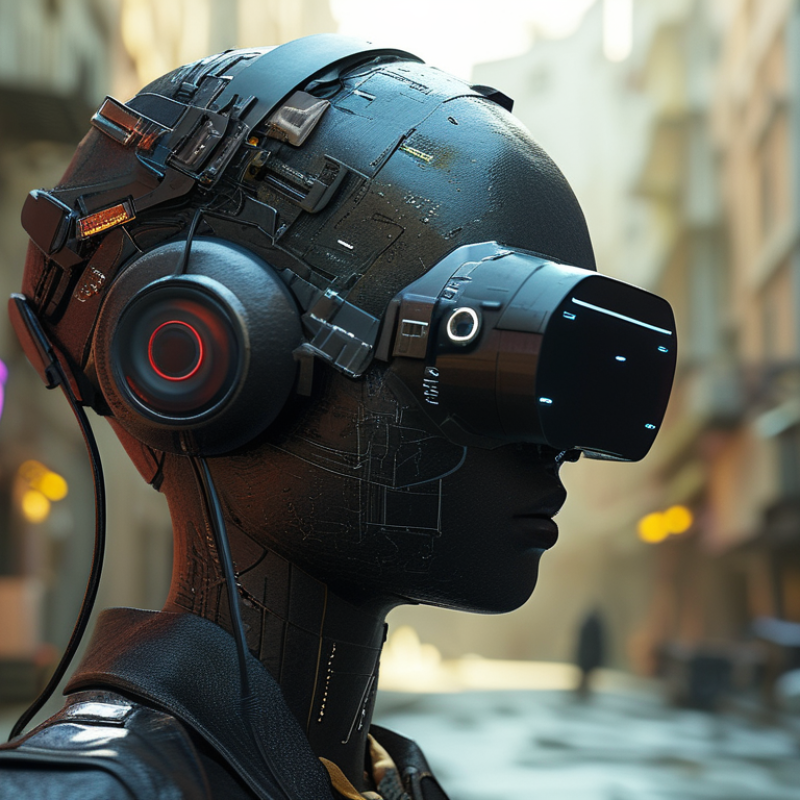
| Extended Reality and Spatial Computing | Computer-generated content is anchored to physical or virtual space through augmented, virtual, or mixed-reality systems. | OpenXR 1.1 was released in 2024, providing a cross-platform API specification for immersive applications and reducing dependence on device-specific interfaces. | Immersive storytelling, industrial guidance, education, simulation, architecture, remote assistance, and spatial data visualization. | Very High | Established | Design must account for tracking quality, user comfort, interaction latency, physical boundaries, and safety in shared spaces. |
| Web-Based 3D and WebGPU | Interactive 3D experiences run directly in browsers without requiring a conventional desktop installation. | WebGPU provides a modern GPU interface for web applications, while glTF 2.0 defines a widely used delivery format for 3D scenes and assets. | Interactive product pages, online configurators, virtual exhibitions, education, data visualization, and browser-based collaboration. | High | Developing | Performance varies by browser, operating system, graphics hardware, network quality, and asset-compression strategy. |
| Generative and Procedural Animation | Rules, simulations, and machine-assisted tools generate variations in motion, environments, materials, or scene composition. | Procedural methods are already used for particle systems, crowd motion, terrain, foliage, destruction, and repetitive environment construction. | Rapid concept development, environment generation, crowd scenes, motion variations, simulations, and personalized content. | High | Developing | Human review remains necessary for continuity, artistic direction, copyright control, physical plausibility, and consistent character identity. |
| Neural Rendering and Gaussian Splatting | Machine-learning-based methods reconstruct or render complex scenes from captured images or video. | 3D Gaussian Splatting was introduced in a 2023 academic paper as a real-time radiance-field rendering approach using optimized 3D Gaussian primitives. | Scene capture, cultural heritage, location visualization, digital twins, immersive documentaries, and rapid environment prototyping. | High | Developing | Current challenges include editable geometry, animation control, data capture quality, artifact removal, memory usage, and reliable export pipelines. |
| Digital Humans and Advanced Facial Animation | Characters combine physically based skin, facial rigs, performance capture, and detailed eye and mouth motion. | Facial animation commonly uses blend shapes, skeletal controls, marker-based or markerless capture, and audio-driven lip synchronization. | Film, episodic content, virtual presenters, games, education, simulation, and interactive customer experiences. | High | Established | Believable results depend on subtle timing, eye focus, facial asymmetry, skin shading, hair simulation, and culturally appropriate character design. |
| Volumetric Capture and 4D Content | People or objects are captured as time-varying three-dimensional performances rather than as flat video. | Volumetric workflows combine synchronized cameras, depth information, reconstruction, cleanup, compression, and playback optimization. | Immersive performances, sports analysis, training, virtual production, heritage documentation, and interactive storytelling. | Medium–High | Developing | Large capture volumes, substantial storage, complex post-production, and high bandwidth can limit routine deployment. |
| Physics-Based Simulation | Cloth, hair, fluids, rigid bodies, soft bodies, smoke, and destruction respond to physical rules or controlled approximations. | Simulation systems use numerical methods and collision detection to produce repeatable, controllable motion for complex materials and environments. | Film effects, product engineering, medical training, scientific visualization, games, and virtual prototyping. | High | Established | Artists must balance physical accuracy with determinism, processing cost, art direction, collision reliability, and iteration speed. |
| Interactive Data Visualization | Animation is used to explain changing datasets, relationships, forecasts, and system behavior in real time. | Effective visualizations use coordinated views, filtering, transitions, spatial encoding, and user-controlled playback rather than decorative motion alone. | Science, finance, public information, logistics, healthcare, climate communication, and operational dashboards. | High | Established | Accuracy, readable scales, semantic color, uncertainty disclosure, keyboard access, and reduced-motion options are essential. |
| Cloud Collaboration and Remote Production | Assets, scenes, reviews, rendering tasks, and version history are shared across distributed teams through networked workflows. | OpenUSD provides a framework for describing, composing, and exchanging complex 3D scenes across applications and production departments. | Animation production, virtual art departments, architectural review, training, visualization, and multi-location collaboration. | High | Established | Success depends on asset governance, permissions, version control, bandwidth, data security, color management, and clear review processes. |
| Sustainable Graphics and Efficient Computing | Rendering and delivery are optimized to reduce energy use, memory consumption, data transfer, and unnecessary computation. | Practical measures include level-of-detail systems, texture compression, adaptive resolution, efficient lighting, frame-rate control, and smaller delivery packages. | Web animation, mobile experiences, XR applications, large-scale installations, digital twins, and long-running simulations. | High | Established | Performance budgets should be defined during design, with testing across representative devices and network conditions. |
| Accessible and Inclusive Motion Design | Interactive visual experiences are designed for different sensory, motor, cognitive, and visual needs. | WCAG 2.2 includes guidance relevant to keyboard access, focus visibility, non-text alternatives, contrast, timing, and motion-related user preferences. | Public information, education, commerce, entertainment, workplace tools, and immersive installations. | High | Established | Provide captions, audio alternatives, clear focus states, scalable interfaces, reduced-motion controls, readable contrast, and non-XR fallback paths. |


 Your message must be between 20-3,000 characters!