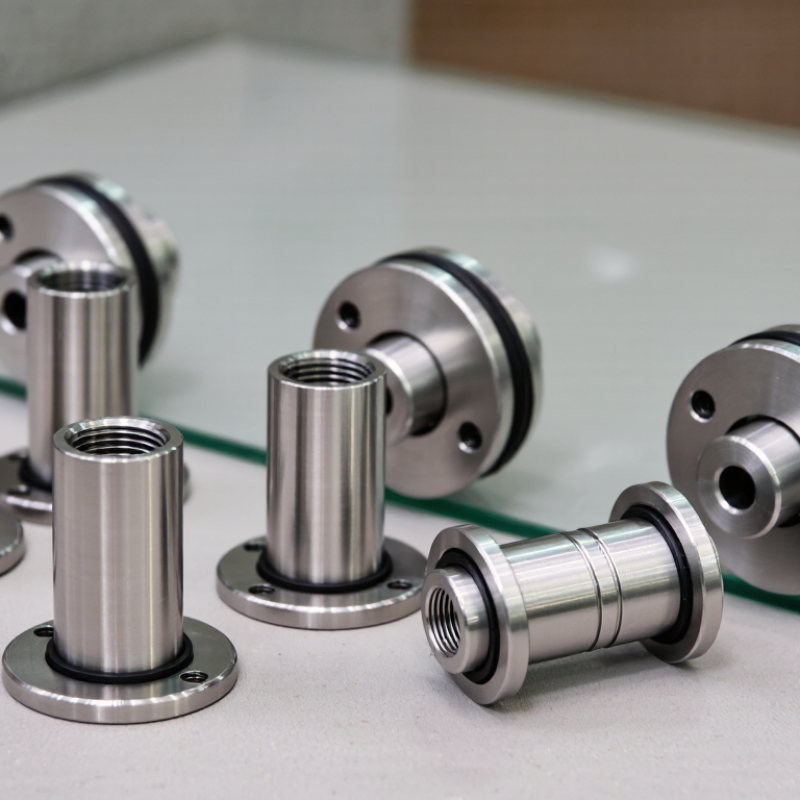
Choosing dependable Glass Railing Standoffs suppliers requires more than comparing product prices. These small fittings carry significant visual and structural responsibility. They connect glass panels to concrete, steel, or timber while preserving a clean, almost floating appearance. A weak finish can become obvious around every hole, edge, and exposed fastener.
Glass consultant Helen Sanders, Ph.D., has emphasized, “Good glass design begins with understanding how the complete system performs, not just how one component looks.” This principle fits standoff selection closely. Buyers should examine stainless steel grade, load information, glass compatibility, surface treatment, machining accuracy, and installation guidance. A supplier with engineering drawings and test documentation deserves more attention than one offering attractive photographs alone.
The China Top 10 Glass Railing Standoffs Suppliers overview focuses on manufacturers with practical strengths. These may include CNC production, custom dimensions, export experience, quality inspection, and responsive technical support. Some suppliers specialize in 304 stainless steel. Others provide 316 stainless steel for coastal balconies, hotels, and exposed terraces. The difference matters.
Details matter here.
A reliable supplier should explain recommended hole diameters, edge distances, gasket placement, and torque limits. It should also clarify whether testing covers the complete railing assembly or only the standoff body. That distinction is often overlooked. Honestly, no supplier is perfect. Delivery delays, inconsistent polishing, or unclear drawings can still appear. Careful buyers should request samples, certificates, and project references before placing large orders. This guide offers a practical starting point for architects, fabricators, contractors, and distributors seeking safer, cleaner, and more consistent Glass Railing Standoffs solutions.
Market Scope and Ranking Method for China’s Top 10 Standoff Suppliers
China Top 10 Glass Railing Standoffs Suppliers: Market Scope and Ranking Method
This ranking covers stainless-steel and aluminum standoffs used in interior and exterior glass railings. The scope includes manufacturers, exporters, and technically capable fabricators in China. Grand View Research identifies architectural glass as a growing construction material, while Mordor Intelligence reports continued expansion in global railing and facade applications. These trends support stronger demand for compact, corrosion-resistant fixing systems.
The ranking uses five measurable areas: production capacity, export activity, material traceability, quality documentation, and delivery performance. UN Comtrade trade data helps verify export activity, but it cannot confirm factory capability alone. We also examine ISO 9001 systems, salt-spray testing, load-test records, machining tolerance, and project references. Suppliers receive weighted scores, with technical reliability valued above online visibility. That choice is debatable. Public data is incomplete, and some smaller factories may be underrated.
Tips: Request mill certificates, dimensional inspection reports, and current load-test evidence. Check whether the stated 316 stainless steel grade matches the supplied material. Ask for sample drilling before approving a large order. A low price may hide inconsistent polishing or weak thread engagement. Confirm packaging details, especially for polished parts shipped over long distances. Ranking should guide supplier screening, not replace an independent technical review.
Materials and Sizes: 304/316 Steel, 10–21.52 mm Glass, 38–60 mm Bodies
China’s top 10 glass railing standoff suppliers should be judged by material control, size accuracy, and testing evidence. The International Stainless Steel Forum reported 58.4 million tonnes of global stainless steel production in 2023. This scale does not guarantee quality. Mill certificates still matter.
For coastal projects, 316 stainless steel offers stronger chloride resistance than 304. Indoor applications may use 304 when humidity and salt exposure remain limited. Suppliers should clearly state whether the steel is solid, cast, or machined. Surface finish matters too. Small scratches can become visible corrosion points.
Glass compatibility is equally important. Reliable suppliers should support panels from 10 mm to 21.52 mm, including laminated glass configurations. Body diameters commonly range from 38 mm to 60 mm, but larger bodies may require deeper fixing zones. Ask for tested load values, hole diameters, edge distances, and installation tolerances. EN 1991-1-1 and ASTM E894 can guide structural checks, although project engineers must confirm the final system. Some catalogs list wide size ranges without showing test conditions. That deserves reflection. A polished finish is not proof of engineering quality.
China Top 10 Glass Railing Standoffs Suppliers - Materials and Sizes: 304/316 Steel, 10–21.52 mm Glass, 38–60 mm Bodies
Rank
Supplier Reference
Primary Material
Glass Thickness
Body Diameter
Common Finish
Typical Use
Mounting Base
Configuration
Customization
01
Supplier Reference A
316 stainless steel
12–21.52 mm
50 mm
Brushed satin
Coastal and outdoor railings
Round base plate
Single-sided / double-sided
Hole position and finish
02
Supplier Reference B
304 stainless steel
10–19 mm
38 mm
Polished mirror
Indoor stairs and balconies
Concealed threaded mount
Single-sided
Custom projection length
03
Supplier Reference C
316 stainless steel
12–21.52 mm
60 mm
Brushed satin
Frameless poolside systems
Square or round plate
Double-sided
Base shape and anchor type
04
Supplier Reference D
304 stainless steel
10–15 mm
50 mm
Black powder-coated
Interior commercial partitions
Round base plate
Single-sided
Color and thread size
05
Supplier Reference E
316 stainless steel
15–21.52 mm
50–60 mm
Electropolished
Marine and exposed terraces
Heavy-duty base plate
Double-sided
Load-bearing plate design
06
Supplier Reference F
304 stainless steel
10–12 mm
38–50 mm
Polished mirror
Residential stair guards
Concealed threaded mount
Single-sided
Projection and glass hole size
07
Supplier Reference G
316 stainless steel
12–19 mm
50 mm
Satin and PVD finishes
Hotels and public buildings
Round or square plate
Single-sided / double-sided
Decorative coating options
08
Supplier Reference H
304 stainless steel
10–17.52 mm
40–50 mm
Brushed satin
Retail and office interiors
Round base plate
Single-sided
Plate diameter and height
09
Supplier Reference I
316 stainless steel
12–21.52 mm
60 mm
Brushed or polished
Exterior balconies and decks
Structural base plate
Double-sided
Anchor layout and finish
10
Supplier Reference J
304 stainless steel
10–19 mm
38–50 mm
Satin or black finish
Interior glass balustrades
Round base plate
Single-sided / double-sided
Color, height, and hole pattern
Specifications shown are common industry ranges for stainless-steel glass railing standoffs; final dimensions, load ratings, glass requirements, and compliance documentation should be confirmed before ordering.
Safety Benchmarks: 1.5 kN/m Line Loads, ASTM E2353, and EN 1991-1-1
China Top 10 Glass Railing Standoffs Suppliers
When comparing China’s top ten glass railing standoffs suppliers, safety evidence should come before finish quality. A 1.5 kN/m line load is a useful project benchmark for many guardrail applications. It represents a horizontal load applied along the handrail or guarding edge. However, it is not a universal requirement for every building.
ASTM E2353 evaluates glazing performance in permanent railing systems, guards, and balustrades. Ask suppliers for complete test reports, not isolated laboratory photographs. The report should identify glass type, thickness, standoff spacing, anchor details, and failure behavior. A catalogue rating is not proof. Load paths matter more than polished stainless steel.
EN 1991-1-1 assigns imposed loads according to building use and occupancy. Residential balconies, public corridors, stairs, and crowded venues may require different design values. Local national annexes can also change the calculation.
Check the substrate before selecting hardware. Concrete strength, edge distance, bolt diameter, and installation torque directly affect resistance. Site pull tests can reveal weak anchors or poor drilling. They are often overlooked.
A reliable supplier should provide drawings, material certificates, corrosion data, installation instructions, and traceable testing. Request calculations from a qualified structural engineer.
One detail still deserves reflection: a tested assembly may not represent the actual project. Different glass, spacing, temperature, or substrate can change performance. Safety is a system, not a component.
Supplier Profiles: Certifications, MOQ, Lead Time, and Customization Capacity
China Top 10 Glass Railing Standoffs Suppliers
When screening China’s top ten glass railing standoffs suppliers, certification should come before price. Look for ISO 9001 quality systems and material certificates for 304 or 316 stainless steel. Glass-related compliance may include EN 12150, ASTM C1048, or ANSI Z97.1, depending on the project market. Grand View Research estimates the global glass railing market will expand steadily through 2030, driven by residential renovation and commercial construction. That growth makes traceable testing more important.
MOQ varies widely. Standard standoffs may start at 50–100 pieces, while custom finishes can require 300 pieces or more. Typical lead times range from 15 to 35 days after drawing approval. Ask whether this includes polishing, drilling, inspection, and export packing. Some suppliers quote seven days, but that may cover production only. This is an easy detail to miss. Customization capacity should include hole spacing, barrel diameter, thread type, satin or mirror finishing, and salt-spray testing. ASTM B117 exposure data can reveal weak surface treatment.
Tips: Request one sample set, one material report, and one dimensional inspection record. Check the thread by hand. It should engage smoothly, without visible play. Also compare tolerances, not only unit prices. A supplier with a low MOQ may lack stable tooling. Conversely, a large factory may overlook small orders. The best profile is not always the biggest one. Reflect on installation conditions before choosing 304 stainless steel; coastal projects often justify 316 stainless steel.
Installation and Cost Review: Hole Spacing, Edge Distance, and Price Drivers
China Top 10 Glass Railing Standoffs Suppliers
When comparing suppliers, installation details often matter more than catalog photos. Hole spacing should match the railing layout, glass size, and expected handrail loads. A 100 mm change can affect support balance and visual alignment. Confirm every dimension against approved engineering drawings.
Edge distance is measured from the hole edge to the glass edge, not from the standoff center. Too little distance may create stress around the opening. Too much distance can increase glass size and material waste. Tempered glass should not be drilled on site. Ask suppliers to confirm glass thickness, hole diameter, tolerances, and compatibility with laminated or toughened panels. Small errors become expensive after delivery.
Price depends on more than stainless steel weight. Material grade, surface finish, machining accuracy, testing, packaging, order quantity, and freight all influence the quotation. Custom hole patterns usually cost more than standard layouts. Difficult substrates may also require longer anchors or special sleeves. In my installation reviews, unclear drawings caused more delays than high unit prices. I still recheck measurements manually, because a neat spreadsheet can hide one missing edge dimension. Request sample hardware, a dimensional drawing, and a complete cost breakdown before placing a large order.
China Top 10 Glass Railing Standoffs Suppliers — Installation and Cost Review
Typical planning benchmarks for frameless glass railing systems. Values vary with supplier specifications, local codes, glass configuration, substrate condition, and site access.
For common laminated tempered-glass railing assemblies, standoff spacing is typically planned around 400–500 mm, while glass hole edge distance is commonly maintained at approximately 60–75 mm or more, subject to the approved glass fabricator’s drilling details. The indicative installed-cost range includes hardware, glass, fabrication, and basic installation, but excludes major substrate repair and unusual access requirements.
Cost figures are budgetary market benchmarks in USD per linear meter, not quotations from any individual supplier or brand.