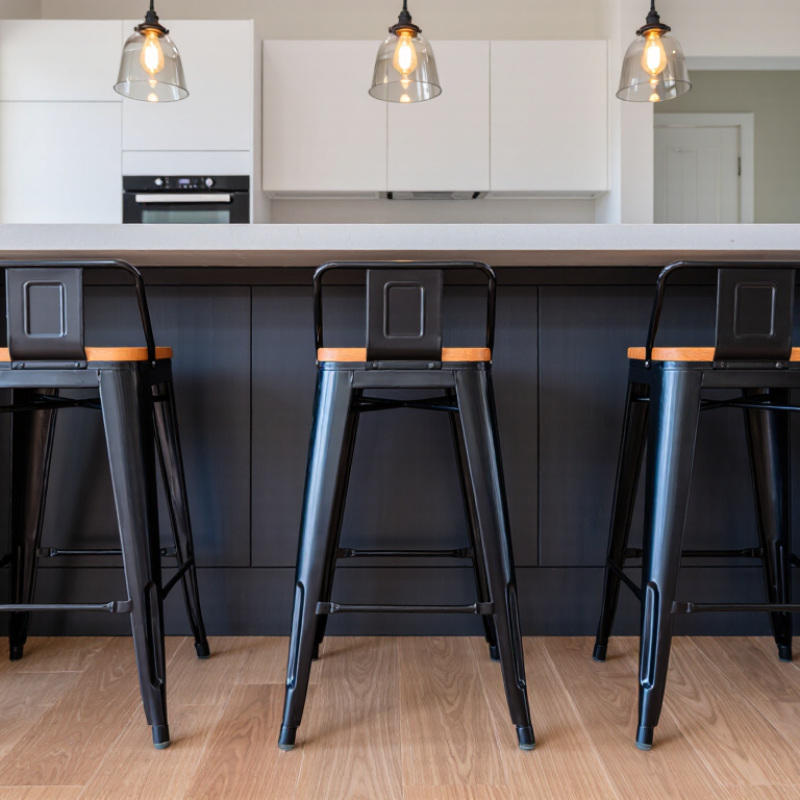
| 1 | Choose the Correct Seat Height | For a standard counter, select a seat height of approximately 24–26 inches (61–66 cm). Leave about 9–12 inches (23–30 cm) between the seat surface and the underside of the counter. | Measure the counter height from the finished floor to the underside of the work surface. Confirm the stool dimension from the floor to the top of the seat, not to the top of the cushion. | Avoid seating positions that force the knees upward or leave the feet unsupported. A suitable height helps reduce pressure on the hips, knees, and lower back. |
| 2 | Prioritize Seat Comfort | Look for a seat with adequate width and depth, rounded front edges, and moderate cushioning. A seat width of about 16–18 inches (41–46 cm) is suitable for many adult users. | Sit on the stool for at least 10–15 minutes. Check that the thighs are supported without the front edge pressing into the backs of the knees. | Choose durable, closed-cell or sealed upholstery for work areas where liquids, oils, or cleaning chemicals may be present. Replace torn padding promptly. |
| 3 | Check Frame and Load Capacity | Select a stool with a published static load rating that exceeds the intended user load. For shared industrial use, a rated capacity of at least 300 lb (136 kg) is a practical baseline, unless the application requires more. | Review the manufacturer’s load-rating documentation and inspect welds, joints, fasteners, and connection points. Do not rely only on visual thickness of the metal. | Do not use the stool as a step ladder or standing platform. Load ratings generally apply to sitting use on a level surface and may not cover impact or misuse. |
| 4 | Evaluate Stability and Footprint | Prefer a broad, rigid base with four stable contact points or a properly engineered pedestal base. The frame should resist rocking, twisting, and tipping during normal seated movement. | Place the stool on a flat floor and apply moderate pressure to the seat from several directions. Check for wobble, uneven feet, frame flex, or movement at the joints. | Use adjustable leveling glides where floors are uneven. Keep all feet or the base fully supported; never place the stool on loose mats, debris, or unstable platforms. |
| 5 | Inspect the Footrest Design | Choose a continuous or well-supported footrest positioned comfortably below the seat. The footrest should support both feet without sharp edges or excessive flex. | Sit normally and confirm that the feet can rest naturally without stretching, dangling, or contacting exposed bolts. Test the footrest for movement and surface grip. | A secure footrest improves posture and reduces leg fatigue. Use a rounded, corrosion-resistant footrest and inspect it regularly for loosened welds or fasteners. |
| 6 | Select Appropriate Materials | Powder-coated steel or stainless steel is suitable for many industrial environments. Use sealed wood or high-density polymer only when their resistance matches the workplace conditions. | Identify exposure to moisture, oils, solvents, heat, welding sparks, abrasive dust, or wash-down procedures before selecting the finish and seat material. | Avoid finishes that blister, flake, or retain contaminants. For damp or corrosive areas, use corrosion-resistant hardware and promptly remove standing water. |
| 7 | Assess Cleanability and Maintenance | Favor smooth, non-porous surfaces, sealed seams, minimal crevices, and removable or replaceable components. The design should allow routine inspection without specialized tools. | Review the cleaning instructions and test whether the seat, frame, and footrest can be wiped completely. Confirm compatibility between cleaning agents and the surface finish. | Do not use abrasive cleaners or unapproved solvents that may weaken coatings or upholstery. Establish a regular cleaning schedule based on the level of contamination. |
| 8 | Consider Mobility and Floor Protection | Use fixed glides for maximum stability in production areas. Use casters only when movement is necessary and when the floor, workload, and operating environment are suitable. | Confirm that the glide or caster type matches the floor surface. Test rolling resistance, braking or locking action, and clearance from nearby equipment. | Casters can increase unintended movement and tipping risk, especially at counter height. Lockable casters and non-marking industrial glides can reduce these risks when properly selected. |
| 9 | Review Ergonomics for the Work Task | Match the stool to the task. A backrest may improve support for longer seated work, while a backless stool may provide easier access and movement for short-duration tasks. | Reproduce the actual work posture. Confirm that the user can keep the shoulders relaxed, elbows near the body, and feet supported without leaning or twisting excessively. | Alternate sitting and standing where possible. Avoid prolonged static postures, and provide a suitable foot support when the work surface is too high for the user. |
| 10 | Verify Compliance and Workplace Fit | Confirm that the stool is suitable for the intended environment, user population, and applicable workplace requirements. Check dimensions, rated capacity, materials, and replacement-part availability before purchase. | Compare the product documentation with the site’s risk assessment, cleaning procedures, floor conditions, and required clearances. Inspect a sample unit before placing a larger order. | Keep access routes, emergency equipment, and machine controls unobstructed. Remove any stool with cracked frames, damaged welds, missing hardware, unstable feet, or failed adjustment parts. |


 Your message must be between 20-3,000 characters!