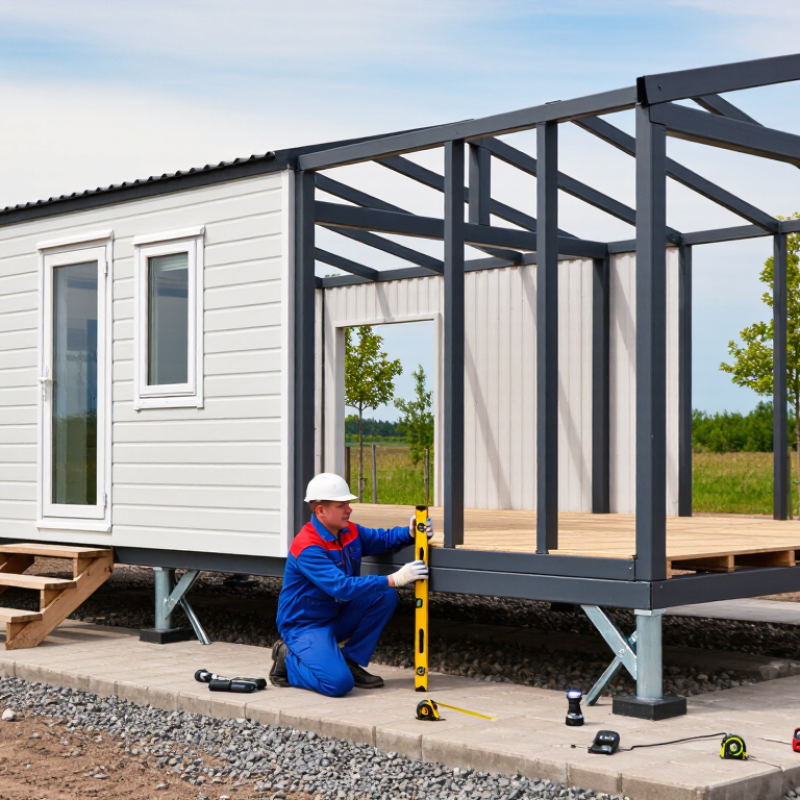
| Prepare safely | Confirm the home is suitable for inspection and identify any signs of shifting, damaged supports, or unsafe access. | Walk around the exterior; review the home’s installation or owner documentation. | Note visible concerns and the locations of support points. Follow the manufacturer’s instructions and applicable local requirements. | Stop work if supports appear damaged or unstable, or if the home has moved substantially. Contact a qualified mobile-home professional. |
| Check the floor | Compare the floor in several areas and directions. | Use a suitable level on a firm floor surface; check front-to-back and side-to-side in multiple rooms. | Record each location and reading. There is no single tolerance that applies to every home; use the manufacturer’s specifications and local requirements. | Have a qualified professional assess uneven readings before attempting adjustments. |
| Check doors and windows | Look for sticking, unexpected gaps, or changes in how doors and windows operate. | Open and close several doors and windows; visually compare frames and reveals. | Record any binding or uneven gaps. These observations can indicate movement but do not, by themselves, confirm a leveling problem. | Recheck after the level assessment. Seek professional inspection if problems persist or worsen. |
| Inspect supports and piers | Look for displaced, cracked, leaning, or visibly deteriorated support components. | Inspect accessible areas from outside; do not crawl beneath an unsupported or unstable home. | Supports should appear intact and positioned as specified for the home and site. | Do not move or remove supports. Arrange an inspection by a qualified professional. |
| Recheck utilities | Check for signs of strain or damage around water, drainage, gas, and electrical connections. | Look only for visible issues, such as leaks, damaged lines, unusual odors, or exposed wiring; do not disconnect or adjust connections. | Connections should show no visible damage or leakage. Utility-specific requirements may apply. | If gas is smelled, leave the area and contact the gas utility or emergency services from a safe location. For other damage, contact the appropriate licensed utility professional. |
| Verify stability | Check for unusual movement, rocking, or new noises during normal use. | Observe the home from a safe location; compare with prior notes or photographs if available. | Record any change and when it occurs. Do not use an improvised test that could overload the structure. | Keep people clear of questionable areas and arrange professional assessment if movement or instability is observed. |
| Recheck after work | Repeat floor-level and door/window checks after any professional leveling work. | Use the same measurement locations and tools as in the initial inspection. | Compare before-and-after readings and document the date, locations, and any remaining concerns. | Ask the installer or qualified professional to review results that do not meet the home’s specifications or local requirements. |
| Keep a maintenance record | Track recurring changes that could affect level or stability. | Maintain a dated log with readings, observations, and inspection details. | Include measurement locations, visible utility concerns, and follow-up actions. | Arrange a new inspection if readings change noticeably or signs of movement, damage, or utility problems appear. |


 Your message must be between 20-3,000 characters!