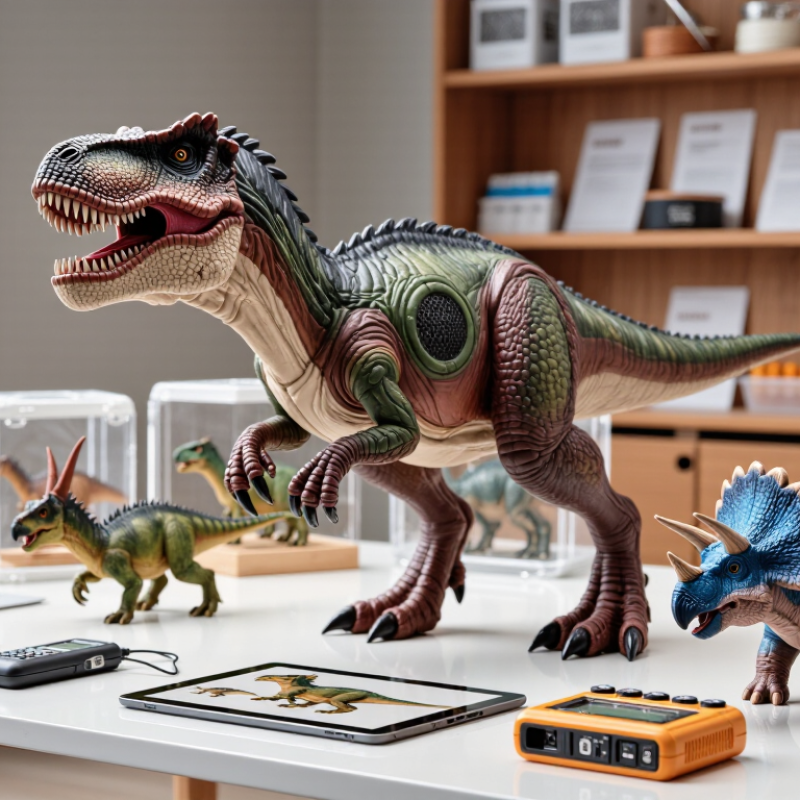
| Intended Use and Audience | Where the dinosaur will operate and who will interact with it. | Indoor exhibit, outdoor attraction, retail display, educational setting, or private collection; supervised public use or staff-only operation. | Ask the supplier to confirm that the design, materials, controls, and maintenance plan suit the intended setting and expected visitor interaction. |
| Model and Dimensions | Dinosaur species or design, overall height and length, pose, and available installation space. | Specify maximum dimensions in millimeters or feet, required clearance, doorway access, and whether the model must be shipped in sections. | Request dimensioned drawings, crate dimensions, total shipping weight, and installation requirements before approving the order. |
| Movement and Articulation | Which body parts move and how each movement should look. | Possible movements include head rotation, jaw opening, tail swing, blinking, and body motion. Define movement range, speed, sequence, and whether actions run continuously or on demand. | Request a demonstration video and written movement sequence. Confirm limits, emergency stop behavior, and access to moving-part mechanisms. |
| Sound and Interaction | Audio content, volume, trigger method, and interactive features. | Define roar or environmental sounds, approximate operating volume, push-button or sensor activation, and whether volume can be adjusted or muted. | Confirm sound controls, sensor range, available audio formats, and how the system performs in a noisy or public environment. |
| Skin, Color, and Finish | Surface appearance, texture, color references, and repair expectations. | Specify color references, scale or skin texture, paint finish, and whether the surface needs to withstand routine cleaning or outdoor exposure. | Review material samples or close-up photos. Ask about cleaning instructions, color consistency, UV exposure, and repair methods. |
| Frame and Materials | Structural frame, outer covering, and expected operating conditions. | State whether the model is for indoor or outdoor use and identify exposure to moisture, sunlight, dust, or temperature changes. | Request a description of the frame and covering materials, corrosion protection where applicable, and any environmental limits stated by the supplier. |
| Power and Controls | Electrical supply, control method, cable routing, and installation location. | Provide the site’s local voltage and frequency, outlet location, preferred control type, and any required cable length or concealed wiring. | Ask for rated input details, wiring diagrams, controller instructions, and applicable electrical compliance documentation for the destination market. |
| Safety and Access | Visitor proximity, moving-part protection, stability, and service access. | Define whether barriers are required, how the model will be anchored, and whether staff need lockable access to controls or service panels. | Review risk controls for pinch points, exposed wiring, tipping, and emergency shutdown. Confirm installation and inspection procedures. |
| Operating Schedule | Expected daily run time, activation frequency, and rest periods. | Estimate operating hours per day and activations per hour; note whether the dinosaur will run continuously or only when triggered. | Ask for the supplier’s recommended duty cycle and any stated limits on continuous operation or repeated movement. |
| Delivery and Installation | Destination, access constraints, unloading, assembly, and commissioning. | Provide delivery address, loading access, lift or doorway limits, preferred delivery window, and whether on-site assembly is needed. | Confirm packing method, shipment dimensions, installation scope, required tools or lifting equipment, and who is responsible for commissioning. |
| Maintenance and Spare Parts | Routine checks, likely wear items, troubleshooting, and parts availability. | Request a maintenance schedule and identify consumables or replaceable items such as sensors, cables, actuators, or control components. | Ask for a parts list, service instructions, expected parts lead times, and the process for reporting faults. |
| Testing and Acceptance | How the finished product will be inspected and approved before shipment. | Agree on checks for dimensions, movement, sound, finish, controls, and included accessories; define what evidence is needed before final approval. | Request dated photos or a live video inspection, a functional test record, and written confirmation that agreed requirements have been met. |
| Warranty and Documentation | Warranty coverage, exclusions, support process, and handover documents. | Clarify warranty duration and coverage for mechanical, electrical, and surface issues; request manuals, drawings, and a parts list. | Obtain warranty terms and support contact procedures in writing before placing the order. |


 Your message must be between 20-3,000 characters!