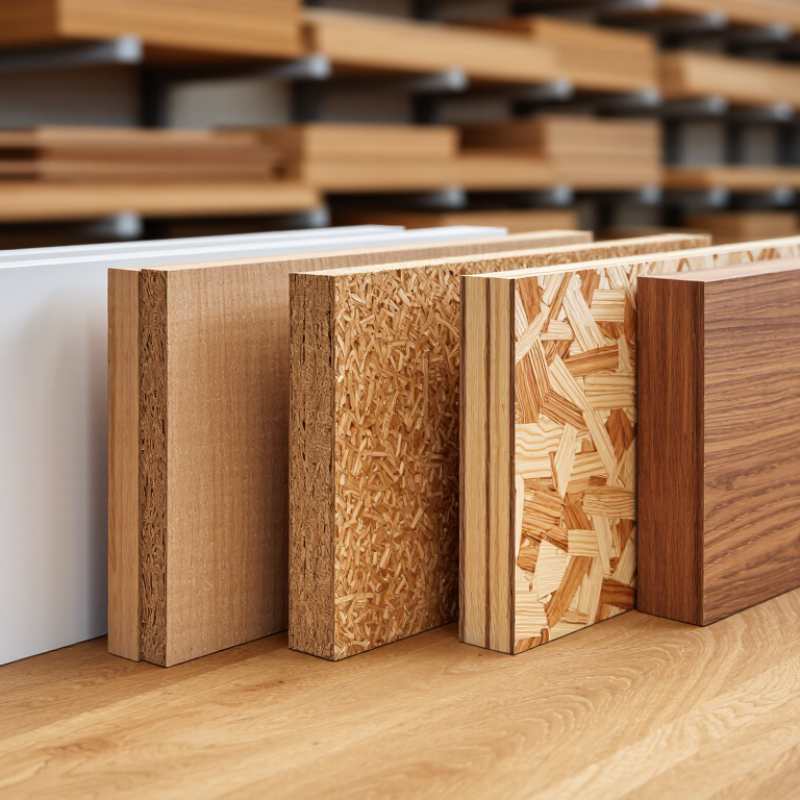
| Panel definition | A panel manufactured from natural wood boards, slabs, or glued solid-wood lamellas rather than wood fibers, veneers, or particles. | The panel retains the visual character of real wood, including grain, knots, color variation, and possible growth features. |
| Basic structure | Single-piece boards may be edge-glued into a panel. Wider panels are commonly made from several solid-wood strips joined along their edges. | The direction of the grain is generally consistent across the panel, although strip layout and joints may remain visible. |
| Common wood species | Oak, maple, beech, walnut, ash, cherry, pine, spruce, and other locally available hardwoods or softwoods. | Species selection affects hardness, density, appearance, machining behavior, cost, and resistance to wear. |
| Typical thickness | Common furniture and interior panel thicknesses are approximately 18–40 mm, although thinner and thicker panels are available. | The appropriate thickness depends on span, load, support spacing, intended appearance, and installation method. |
| Moisture content | Interior solid-wood panels are commonly conditioned to approximately 6–10% moisture content, depending on the intended service environment. | The panel should be acclimatized to the installation area because wood absorbs and releases moisture naturally. |
| Dimensional movement | Solid wood expands and contracts mainly across the grain as relative humidity changes. | Installation should allow for seasonal movement through suitable gaps, fasteners, clips, or floating-panel details. |
| Strength and stiffness | Performance varies by species, grain orientation, moisture content, panel thickness, joints, and support conditions. | Solid wood can provide good structural performance, but load-bearing applications require appropriate engineering and grading. |
| Machinability | Panels can generally be sawn, routed, drilled, sanded, and profiled using standard woodworking equipment. | Sharp tools and suitable feed rates help reduce tear-out, especially when machining around knots or reversing grain. |
| Surface finishing | Typical finishes include clear oil, wax, stain, paint, lacquer, or water-based protective coatings. | Finishing all exposed faces and edges helps provide more uniform moisture exchange and surface protection. |
| Appearance | Natural grain patterns, color variation, knots, medullary rays, and joint lines may be visible. | The appearance is unique to each panel and may change gradually with light exposure and finishing treatments. |
| Common interior uses | Tabletops, countertops, shelves, cabinet doors, workbenches, stair components, wall panels, and decorative furniture parts. | Interior applications are preferred where moisture and temperature can be reasonably controlled. |
| Common exterior uses | Covered exterior cladding, doors, outdoor furniture, and sheltered architectural details when the species, design, and finish are suitable. | Exterior exposure requires weather-resistant detailing, appropriate coating maintenance, drainage, and ventilation. |
| Main advantages | Authentic natural appearance, repairability, good machinability, potential for refinishing, and high design flexibility. | Many panels can be sanded and refinished during their service life, subject to remaining thickness and condition. |
| Main limitations | Higher moisture sensitivity, possible warping or checking, natural variation, and often greater cost than engineered wood panels. | Careful material selection, acclimatization, joint design, and regular maintenance help reduce performance problems. |
| Best selection criteria | Wood species, moisture content, panel construction, grade, dimensions, surface quality, intended location, and finish compatibility. | For responsible sourcing, verify the wood’s origin and applicable chain-of-custody or sustainability documentation. |


 Your message must be between 20-3,000 characters!