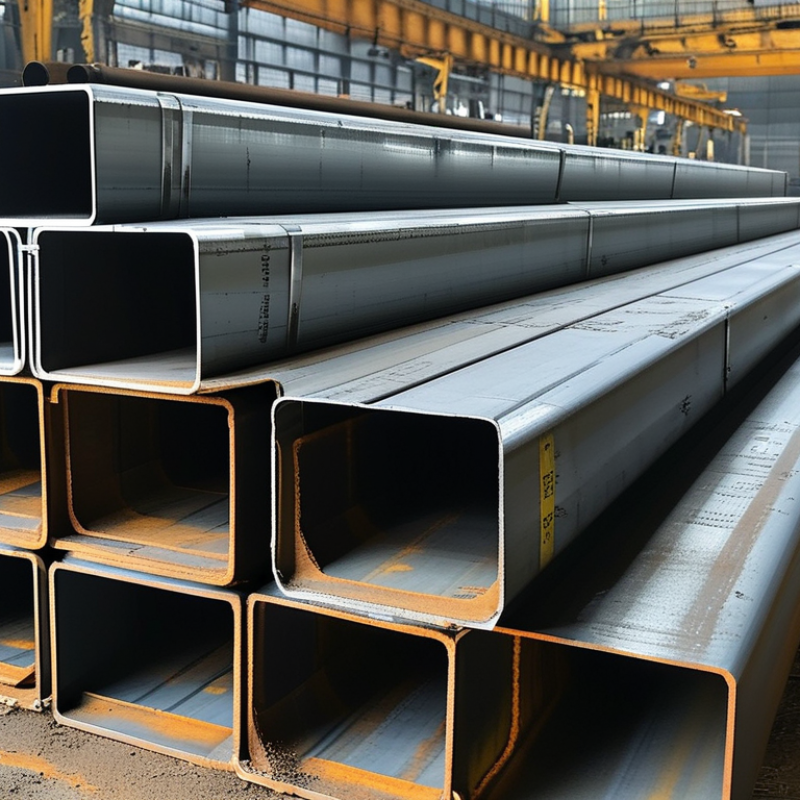
| Product Standard | Confirm the manufacturing and dimensional standard specified for the project. | Use the standard required by the design documents, such as ASTM A500/A500M for structural hollow sections or EN 10219 for cold-formed welded structural sections. | Quotation, product datasheet, applicable standard, and certificate of compliance. | 15% | Reject offers that do not clearly identify the applicable standard and product designation. |
| Steel Grade and Strength | Check yield strength, tensile strength, elongation, and suitability for the structural load. | For common structural applications, ASTM A500 Grade B has a minimum yield strength of approximately 46 ksi (315 MPa); higher-strength grades may be required by the engineer. | Heat-number-based mill test certificate showing chemical and mechanical properties. | 15% | Do not substitute a lower grade solely because its price is lower. |
| Dimensions and Wall Thickness | Verify outside dimensions, nominal wall thickness, corner radius, and permissible tolerances. | The size and wall thickness must match the approved drawings and the tolerances of the specified product standard. | Dimensional inspection report, calibrated measuring records, and sample inspection. | 12% | Pay attention to actual wall thickness, not only the nominal thickness shown on the quotation. |
| Surface Condition and Weld Quality | Inspect the surface for cracks, laminations, deep corrosion, excessive dents, and visible weld defects. | The pipe should be free from defects that impair structural performance, fabrication, coating, or service life. | Visual inspection procedure, weld inspection records, and photographs or samples when required. | 8% | Request corrective-action records if recurring weld or surface problems have been reported. |
| Supplier Reliability | Assess production capability, quality-system control, traceability, and delivery performance. | Prefer suppliers able to provide consistent batch traceability, documented inspection procedures, and measurable on-time delivery records. | Quality certificates, audit results, sample inspection reports, references, and recent delivery-performance data. | 18% | A low price should not compensate for weak traceability or repeated delivery failures. |
| Total Cost | Compare material price together with cutting, packaging, freight, testing, taxes, and possible rework. | Compare offers on the same basis, such as price per metric ton or price per meter, with identical grade, size, quantity, and delivery terms. | Itemized quotation, Incoterms, freight estimate, payment terms, packaging charges, and validity period. | 15% | Use landed cost rather than the basic steel price when comparing suppliers. |
| Availability and Lead Time | Confirm stock status, production capacity, minimum order quantity, and dispatch schedule. | Require a written lead time for the exact size, grade, finish, quantity, and delivery location; separate stocked material from made-to-order material. | Inventory confirmation, production schedule, shipping plan, and clearly stated delivery commitment. | 10% | Include buffer time for inspection, customs clearance, inland transport, and unloading. |
| Technical Support | Evaluate support for grade selection, weight calculations, fabrication, welding, coating, and documentation. | The supplier should respond in writing to technical questions and provide drawings, tolerances, certificates, and handling guidance when applicable. | Technical contact details, response-time commitment, product drawings, welding information, and documentation samples. | 5% | Give preference to clear, technically accurate answers rather than unsupported assurances. |
| Testing and Certification | Verify whether chemical analysis, tensile testing, dimensional inspection, and non-destructive testing are included or optional. | Testing must meet the selected standard and the project specification; certificates should identify the relevant heat or batch. | Mill test certificate, inspection certificate, test report, and third-party inspection records when specified. | 7% | Clarify testing charges and approval requirements before placing the purchase order. |
| Packaging and Logistics | Check bundling, labeling, moisture protection, loading method, and transport restrictions. | Bundles should be secured, clearly labeled, protected against avoidable handling damage, and accompanied by packing details. | Packing specification, bundle weight, loading photographs, packing list, and transport documents. | 5% | Confirm unloading equipment and storage conditions at the destination. |
| Final Selection Rule | Combine technical compliance with commercial and service performance. | Select only suppliers that meet all mandatory technical requirements, then rank qualified offers using the weighted criteria above. | Completed comparison sheet, approved certificates, final quotation, and documented risk review. | 100% | Avoid choosing solely on unit price; the best option provides verified compliance, dependable delivery, and acceptable total cost. |


 Your message must be between 20-3,000 characters!