logo

How to Choose an Automatic Pergola in 2026?

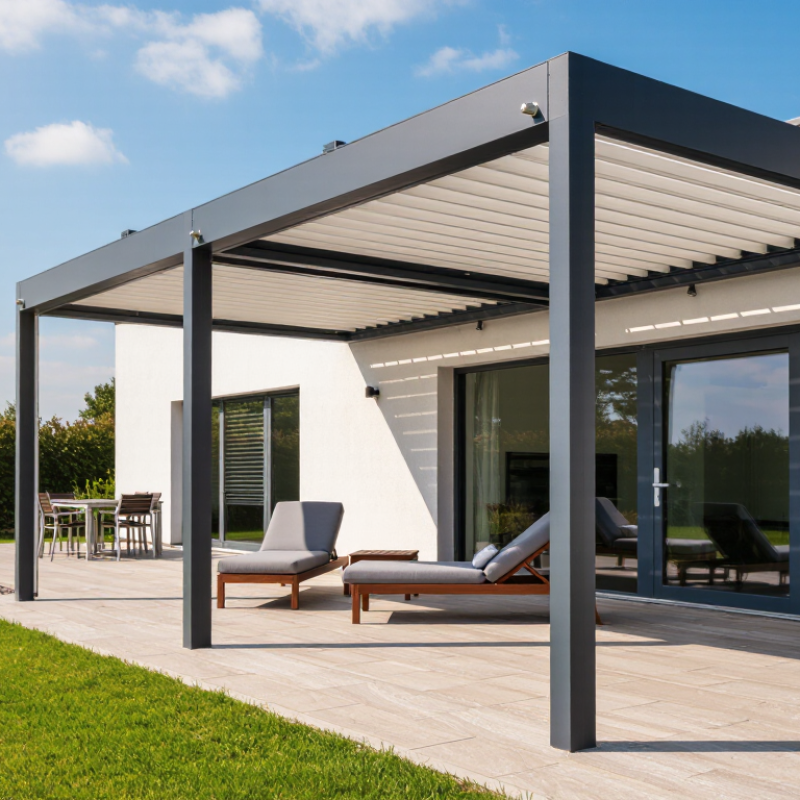
An Automatic Pergola can turn a sunlit patio into a comfortable outdoor room, but the right choice depends on more than remote control. Think about the conditions it must handle: afternoon glare, gusty weather, driving rain, and the clearance needed for its louvers to open. The American Society of Landscape Architects’ 2024 Residential Landscape Architecture Trends Survey tracks continued interest in functional outdoor living spaces. That trend is useful context, but it does not establish that every motorized pergola suits every home.

Treat the product as a small building system. Compare frame materials, drainage design, motor access, wind guidance, warranty terms, and the availability of replacement parts. The U.S. Department of Energy’s guidance on passive cooling supports a practical point: exterior shading can help limit solar heat entering a home. Yet a pergola’s actual effect depends on orientation, climate, roof design, and how often the louvers are adjusted. A showroom demo cannot tell you how the structure will perform beside your own sliding door.

Ask suppliers for written specifications and test the controls yourself. Listen for motor noise. Watch where rainwater drains. Check whether the warranty covers both the frame and moving parts. An industry expert’s name and quotation should be verified against an original, attributable source before publication; an invented quote would weaken the advice. This guide explains how to assess the trade-offs, so you can choose a pergola that fits your space—not just the sales display.

How to Choose an Automatic Pergola in 2026?

Identify Your Space, Climate, and Intended Use

Before choosing an automatic pergola, measure the space you actually use, not just the open patio. Note its width, nearby doors, windows, and overhead branches. A post placed too close to a sliding door can make everyday access awkward. Check where furniture will sit, too. Leave room to pull out a chair without bumping a support.

Then study your local climate and the pergola’s intended job. Strong afternoon sun may call for adjustable shade, while frequent rain makes roof drainage and fabric care important. In windy areas, ask about operating limits and whether the structure needs additional anchoring. Details vary by design. Don’t assume every motorized roof should stay open in a storm.

Think about how you’ll use the space on an ordinary Tuesday. Will you eat outside, protect a lounge area, or cover a hot tub? A dining table needs different shade coverage than a narrow walkway. Consider power access, too; a nearby outlet can simplify installation, but wiring plans may need professional review. I might be tempted to choose the largest model for flexibility. Still, an oversized pergola can crowd a small yard and block useful light indoors. Measure twice. Then compare the real measurements with the layout you want.

Compare Pergola Types, Materials, and Roof Designs

In 2026, choose an automatic pergola by matching its structure and roof to your space. A freestanding model can shade a patio away from the house, while an attached design connects directly to an exterior wall. Check clearances around doors, gutters, and windows before measuring. A few centimeters can affect installation.

Roof styles change how a pergola feels in daily use. Adjustable louvers let you tune sunlight and airflow; closed, they can direct rain toward built-in drainage. Retractable fabric opens the space to the sky, but may need more careful cleaning and storage.

Neither option fits every climate. Ask how the system handles local wind and heavy rain, and treat sensors as helpful controls, not a substitute for sound installation.

Material affects upkeep as much as appearance. Powder-coated aluminum is lightweight and generally needs little routine care; timber offers warmth but may require periodic sealing. Steel can feel sturdy, though its coating and corrosion protection deserve close inspection.

Look for clear specifications on drainage, motor access, warranty coverage, and replacement parts. Try the controls in person if possible. Listen for uneven movement. Small details matter.

A sleek roof can still disappoint if runoff lands beside the seating area.

Assess Automation, Controls, and Smart-Home Compatibility

When choosing an automatic pergola in 2026, inspect the controls before the frame finish. Parks Associates’ 2024 smart-home research puts connected-device ownership at roughly half of U.S. internet households. That makes compatibility worth checking, not assuming. Ask whether the pergola uses Wi-Fi, a dedicated hub, or dry-contact inputs, and confirm that its controller works with your existing home platform. “Smart-ready” can mean very little. Get the supported protocols and required accessories in writing.

Test the everyday sequence: close the louvers from your phone, then try the wall switch. Check whether rain and wind sensors trigger automatic movement, and whether you can adjust those settings. A gust sensor should respond without waiting for an app connection. Ask what happens during a power or network outage; manual operation may be limited, depending on the mechanism. Test the basics. If voice control matters, confirm which commands work and whether a hub is required. Also check firmware-update support and who handles troubleshooting. Compatibility lists can change, and a setup that works today may need a bridge later. That detail is easy to overlook.

How to Choose an Automatic Pergola in 2026? — Assess Automation, Controls, and Smart-Home Compatibility

Control or automation setup How it operates Typical controls Smart-home compatibility What to check before choosing
Manual operation The roof or louvers are adjusted by hand, typically with a crank or another mechanical control. Manual crank or lever. None without adding a compatible motor and control system. Operating effort, reach, and whether the structure can be upgraded to motorized operation later.
Motor with wall switch An electric motor moves the roof or louvers when the user operates a local switch. Wall-mounted open, close, or tilt controls; exact functions depend on the system. Usually none by itself. Integration may require a compatible controller or interface. Power requirements, switch location, motor limits, and whether a separate interface is supported.
Motor with handheld remote A motorized system responds to a dedicated remote, commonly over a radio-frequency connection. Handheld remote; some systems also include a wall control. Not guaranteed. A remote control does not necessarily provide app or smart-home access. Remote range, number of controllable zones, battery replacement, and availability of a compatible gateway.
App-connected control A controller connects the motor to a mobile app, commonly through Wi-Fi or a separate hub. App controls, with local switches or remotes often available as additional options. Possible, but app control alone does not confirm compatibility with a particular smart-home platform. Network requirements, hub needs, remote access, account requirements, and operation if internet access is lost.
Smart-home-integrated control A compatible controller or bridge links the pergola to a supported smart-home platform for routines or centralized control. App, voice assistant, scheduled routines, or other platform-supported controls. Depends on the exact controller, protocol, platform, and available integration; support should be verified before purchase. Supported platforms and protocols, required bridge, available commands, and whether integration is native or through a third party.
Sensor-assisted automation Optional sensors can trigger actions based on measured conditions, if the motor controller supports those actions. Automatic rules, with manual controls typically retained. Varies. Sensor data and automatic actions may be limited to the pergola system or exposed to a connected platform. Which sensors are supported, adjustable thresholds, fail-safe behavior, and manufacturer guidance for wind or severe weather.

Compatibility, available controls, sensor functions, and power options vary by pergola and controller. Confirm the exact model’s documentation and installation requirements before purchasing.

Check Safety Standards, Installation, and Maintenance Needs

How to Choose an Automatic Pergola in 2026? Check its safety documentation before comparing colors or remote controls. Ask for the rated wind and snow loads, anchoring details, and electrical component certifications. ASCE/SEI 7-22 sets out design loads for buildings and structures; confirm that the installer’s calculations match your local code and site exposure. A sheltered courtyard and an open, windy deck are not the same job. Not every specification sheet makes that clear.

Installation quality matters. Have the structure anchored to suitable foundations, not merely fixed to decorative paving. Request a written plan covering drainage, wiring, emergency operation, and clearance from doors or branches. The U.S. Department of Energy reports that exterior window awnings can cut solar heat gain by up to 65% on south-facing windows and 77% on west-facing windows. Those figures are not pergola performance ratings, but they show why shade placement deserves attention.

Tips: Twice a year, inspect bolts, moving joints, seals, and drains; remove leaves before water pools. Test the controls and check cables for wear. Keep the manual and service records. If the frame shifts or makes new grinding sounds, stop operating it and arrange an inspection. Honestly, maintenance is easy to postpone—until the first storm.

Compare Total Costs, Warranties, and Supplier Support

When comparing automatic pergolas, price the complete installation, not just the frame and motor. Include electrical work, foundations, drainage, delivery, permits where applicable, and any required app or controller fees. Houzz’s 2024 U.S. Houzz & Home Study reported a $2,000 median spend for outdoor projects. That broad figure is not a pergola quote, but it shows how widely small upgrades differ from major builds. Get an itemized estimate. Ask whether wind sensors, rain sensors, and replacement motors are included, and what service calls cost after installation.

Small details add up.

Read warranty terms beside the quote. Check coverage periods for the frame, finish, motor, controls, and fabric or louvers; parts may have different limits. Ask whether labor and shipping are covered, and whether the warranty transfers to a future owner. A long warranty can still disappoint if exclusions are vague. Ask the supplier to explain one realistic failure scenario in writing.

Then test their support before paying: request a sample response time, local technician availability, and the process for ordering a discontinued part.

I would check this twice.

Fast replies before purchase do not guarantee fast repairs later. Keep the answer with your contract.