| Woven Polyethylene Fabric with a Gable Roof | Woven polyethylene cover with heat-sealed or stitched seams, supported by a galvanized steel frame. The sloped roof helps shed rain and light snow. | 10 × 20 ft, 12 × 20 ft, and 20 × 20 ft are common residential sizes. | ★★★☆☆
Moderate when UV-treated; untreated fabric degrades faster in direct sunlight. | Good
Water-resistant to waterproof when seams, edges, and attachment points are properly sealed. | Moderate
Requires firm anchoring and regular tensioning; performance varies substantially by frame and installation. | Limited to Moderate
Light snow may shed from a steep roof, but accumulated snow should be removed promptly unless the structure is engineered for snow loads. | Approximately 3–7 years, depending on fabric weight, UV exposure, weather, and maintenance. | Affordable, lightweight, easy to replace, and available in many sizes and roof styles. | Can flap in strong wind, may fade, and is more vulnerable to tearing or abrasion than coated fabrics. | Seasonal vehicle storage, moderate climates, and budget-conscious installations. |
| PVC-Coated Polyester with an Arched Roof | Polyester scrim coated on one or both sides with polyvinyl chloride. An arched frame reduces flat areas where rainwater and snow can collect. | 10 × 20 ft, 12 × 24 ft, and 18 × 20 ft are common size ranges. | ★★★★☆
Strong UV resistance when the coating contains UV stabilizers. | Very Good
Thick PVC coatings provide a low-porosity surface; welded seams generally improve water resistance. | Good
Performs well with a rigid frame, correctly tensioned cover, and anchors suitable for local soil conditions. | Moderate
Arched roofs help shed snow, but heavy or wet snow can exceed the capacity of temporary frames. | Approximately 5–12 years, depending on coating thickness, climate, cleaning, and installation quality. | Durable, highly water-resistant, tear-resistant, and suitable for frequent or extended use. | Heavier than polyethylene, can become less flexible in cold weather, and may cost more. | Areas with frequent rain, repeated seasonal use, and users seeking a more durable fabric cover. |
| Acrylic-Coated Polyester with a Gable or Hip Roof | Solution-dyed or acrylic-coated polyester fabric mounted over a steel or aluminum frame. Sloped roof designs improve drainage. | 10 × 20 ft and 12 × 20 ft are common residential footprints; larger sizes require stronger engineered frames. | ★★★★☆
Good color retention and resistance to sunlight when the fabric is solution-dyed or UV-treated. | Good
Often water-repellent rather than fully waterproof; seam construction and maintenance are important. | Moderate
Suitable for properly anchored installations, but not automatically rated for severe storms. | Limited to Moderate
Best for climates with little or occasional snow unless the frame has a verified snow-load rating. | Approximately 5–10 years, depending on fabric quality, exposure, and care. | Good appearance, reduced heat absorption compared with some dark PVC covers, and strong resistance to fading. | May require periodic re-treatment for water repellency and is less waterproof than a fully coated membrane. | Sunny climates, attractive residential installations, and locations where color stability matters. |
| Solid Polycarbonate Panels with a Sloped Roof | UV-protected polycarbonate sheets fixed to an aluminum or galvanized steel frame. Panel overlaps and flashing direct water away from joints. | Common bay widths are approximately 8–12 ft; length is often customized in 4-ft panel increments. | ★★★★★
UV-coated panels provide strong protection from sunlight; the UV layer should face outward. | Excellent
Rigid panels provide reliable rain protection when joints, edge profiles, and flashing are correctly installed. | Good to Excellent
Rigid systems can perform well, but the frame, fasteners, and foundation must be engineered for local wind loads. | Good
Sloped panels shed snow, but required load capacity depends on panel thickness, support spacing, and local snow conditions. | Approximately 10–20 years or more with UV protection and correct installation. | Long service life, excellent daylight transmission, strong impact resistance, and no fabric flapping. | Higher initial cost, more permanent installation, possible expansion noise, and greater installation complexity. | Permanent residential parking, high-sun locations, and users wanting a rigid roof with natural light. |
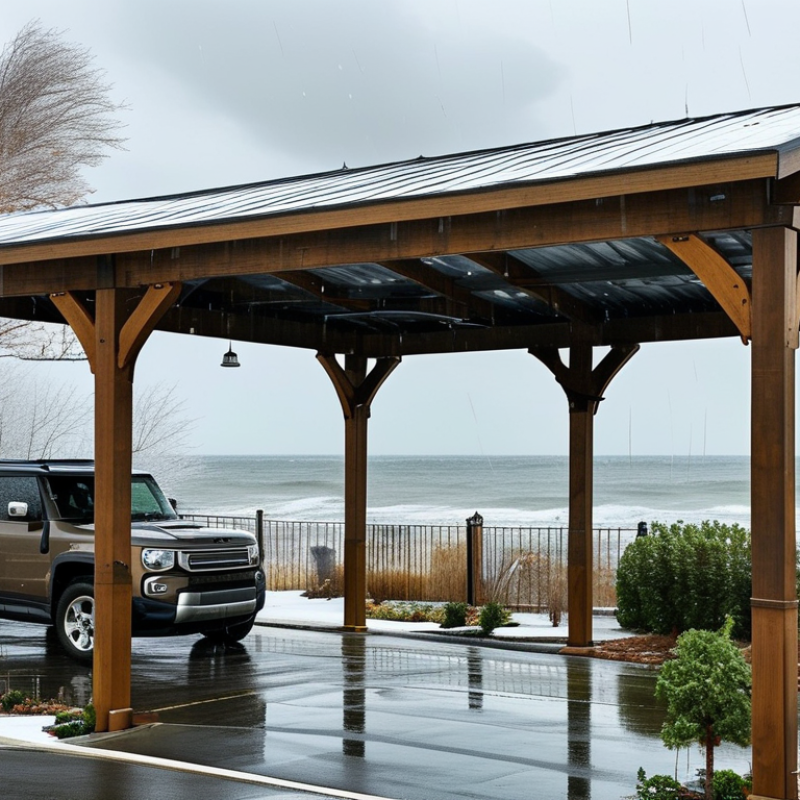
| Galvanized Steel Roof Panels with a Gable Roof | Corrugated or ribbed galvanized steel panels attached to a structural steel frame. A gable roof provides drainage on both sides. | Single-vehicle bays commonly range from 10 × 20 ft to 12 × 24 ft; larger widths need engineered framing. | ★★★★☆
Painted or coated steel resists sunlight well; exposed zinc or paint quality affects long-term appearance. | Excellent
Provides a durable weather barrier when fasteners, overlaps, and roof edges are correctly sealed. | Excellent
Potentially strong, but only when the complete structure and anchoring system are designed for the site’s wind speed. | Excellent
Well suited to snow regions when the roof pitch, purlins, frame, and foundations meet local snow-load requirements. | Approximately 20–40 years or more with corrosion protection and routine maintenance. | Excellent durability, strong weather protection, low flapping, and good resistance to punctures. | Heavier and noisier during rain than fabric, generally more expensive, and less portable. | Permanent installations, high-wind or snowy regions, and long-term vehicle protection. |
| Flat or Low-Slope Fabric Canopy | Fabric cover stretched over a simple frame with limited roof pitch. Some designs use tensioned membranes or a nearly horizontal top. | 8 × 16 ft, 10 × 20 ft, and 12 × 20 ft are common sizes. | ★★★☆☆
Depends primarily on the fabric treatment and exposure. | Moderate
More vulnerable to ponding because water and debris may remain on the cover. | Moderate
Requires excellent tension, edge support, and anchoring because wind can create uplift on broad surfaces. | Limited
Generally unsuitable for regular snow accumulation unless specifically engineered for the local load. | Approximately 2–6 years for common temporary fabric systems. | Simple layout, low profile, easy access, and efficient use of space where weather is mild. | Ponding, debris buildup, wind uplift, and snow accumulation can shorten service life or damage the structure. | Short-term shade, mild climates, temporary parking, and areas with little rain or snow. |


 Your message must be between 20-3,000 characters!