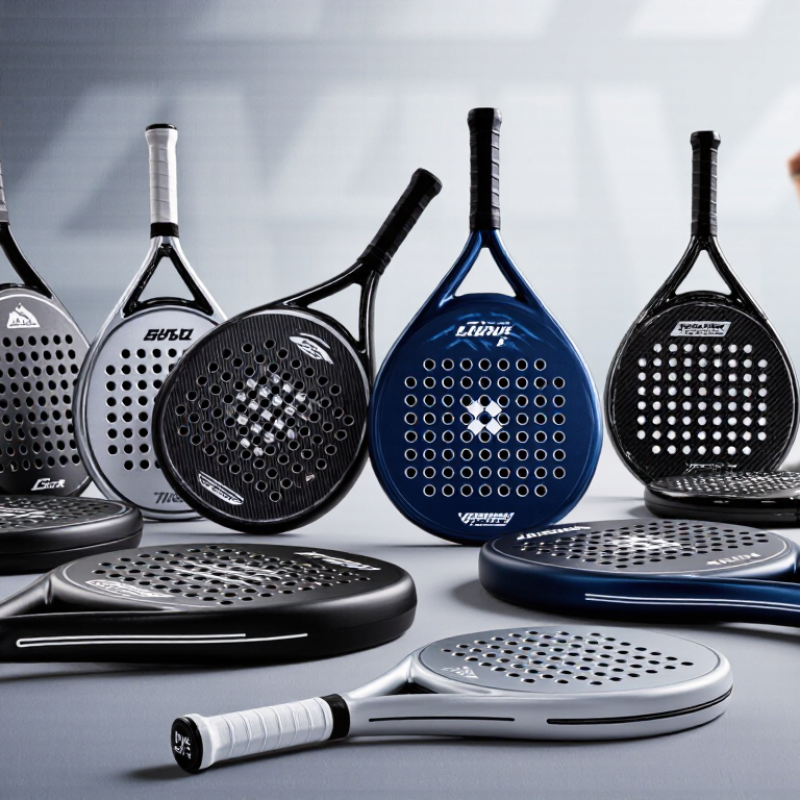
| Carbon fiber face | Carbon fiber is used in the hitting faces for stiffness and structural support. The finished feel also depends on the resin, layup, core, and racket design. | Faces may use carbon fiber, fiberglass, or a blend. Carbon faces are generally stiffer than fiberglass faces, though the exact feel differs between constructions. | Consider carbon if you prefer a firmer response or play regularly. A fiberglass face can feel more forgiving and accessible to some players. |
| Carbon tow labels | Labels such as 3K, 12K, and 18K refer to the approximate number of filaments in a carbon tow, not a universal racket-quality ranking. | A higher K number does not automatically mean a stronger, better, or more powerful racket. Fiber grade, weave, resin, and layup all matter. | Use the label as one construction detail, not as the deciding factor. Compare the racket’s feel, balance, shape, and core as well. |
| Racket shape | Shape influences the approximate location of the sweet spot and how the racket tends to distribute its mass. | Round shapes are commonly designed for control; teardrop shapes aim for a balance of control and power; diamond shapes often favor attacking play. These are general tendencies, not guarantees. | Choose round for easier control, teardrop for an all-court mix, or diamond if you can comfortably handle a more demanding attacking racket. |
| Balance point | Balance describes how weight is distributed between the handle and racket head. It is separate from total weight. | Lower balance generally feels easier to maneuver; higher balance can add leverage for overhead shots but may feel less quick in defense. | Prioritize maneuverability if you value fast reactions at the net or defend frequently. Try a higher-balance racket if overhead power is a priority and it feels comfortable. |
| Core material | The foam core affects impact feel, rebound, and comfort. EVA foam is a common core material in padel rackets. | Soft, medium, and firm descriptions are useful comparisons, but softness labels are not standardized across manufacturers. Temperature and playing conditions can also affect perceived feel. | A softer-feeling core may feel more comfortable and responsive at lower swing speeds. A firmer-feeling core may suit players who prefer a more direct response. |
| Frame construction | The frame supports the racket and may be made from carbon fiber, fiberglass, or a combination of materials. | Material alone does not determine durability. Frame geometry, layup, impact history, and care all influence how well a racket holds up. | Look for a construction that matches your expected use and inspect the frame regularly for cracks or damage, especially after hard impacts. |
| Weight | Total racket weight affects handling and swing effort. Adult padel rackets commonly fall around 350–375 g, although models and individual preferences vary. | Even a small weight difference can change how a racket feels during repeated swings. Added overgrips or protective tape can increase the playing weight. | Choose a weight you can move comfortably throughout a full match. Do not select a heavier racket solely to seek more power. |
| Face texture | Some faces have a textured finish intended to increase friction on contact. | Texture may help with certain spin-producing strokes, but spin also depends on technique, contact, and the ball. A rough finish does not guarantee more spin. | Treat texture as a secondary feature. Prioritize control, comfort, and a shape and balance you can handle consistently. |
| Overall player fit | The best racket is the one that fits your technique, physical comfort, and preferred style of play. | Skill level alone does not determine the right racket. Players at the same level can prefer different shapes, balances, weights, and impact feels. | When possible, test a racket before buying. Compare handling and comfort during defense, volleys, and overhead shots—not just one powerful hit. |


 Your message must be between 20-3,000 characters!