How to Choose Smart Switch Cover Glass for Global Buyers?
Choosing the right smart switch cover glass is more than selecting a clear panel with a polished edge. Global buyers must connect glass performance with installation conditions, user habits, and supply reliability.
Dr. John C. Mauro, a recognized glass scientist, puts the principle clearly: “A glass composition is only as good as the process that makes it.” This advice matters when comparing aluminosilicate, soda-lime, or chemically strengthened glass. A showroom sample may look perfect under soft lighting. Real homes bring fingerprints, cleaning chemicals, temperature changes, and repeated tapping. Small details matter.
Check optical clarity first. Then examine touch sensitivity through the actual printed pattern and frame design. Confirm thickness, corner radius, hole position, surface hardness, and coating durability. A 0.1-millimeter mismatch can create assembly pressure or an uneven smart switch surface. Anti-fingerprint coatings may improve daily use, but they can also change costs and lead times. That trade-off deserves testing.
Ask suppliers for measurable data, not broad promises. Request samples, inspection records, chemical-resistance results, and packaging photographs. Confirm whether quality checks cover edges, silk-screen alignment, color consistency, and hidden microcracks. International shipping adds another risk. Vibration can expose weak packaging quickly.
There is no universal best glass. Sometimes, a thinner panel improves design but reduces tolerance. Sometimes, the lowest price becomes expensive after rejected batches. Buyers should compare the complete supply chain, including tooling, minimum order quantity, replacement policy, and communication speed. The decision may still feel imperfect. Careful validation, however, makes that uncertainty visible before mass production begins.
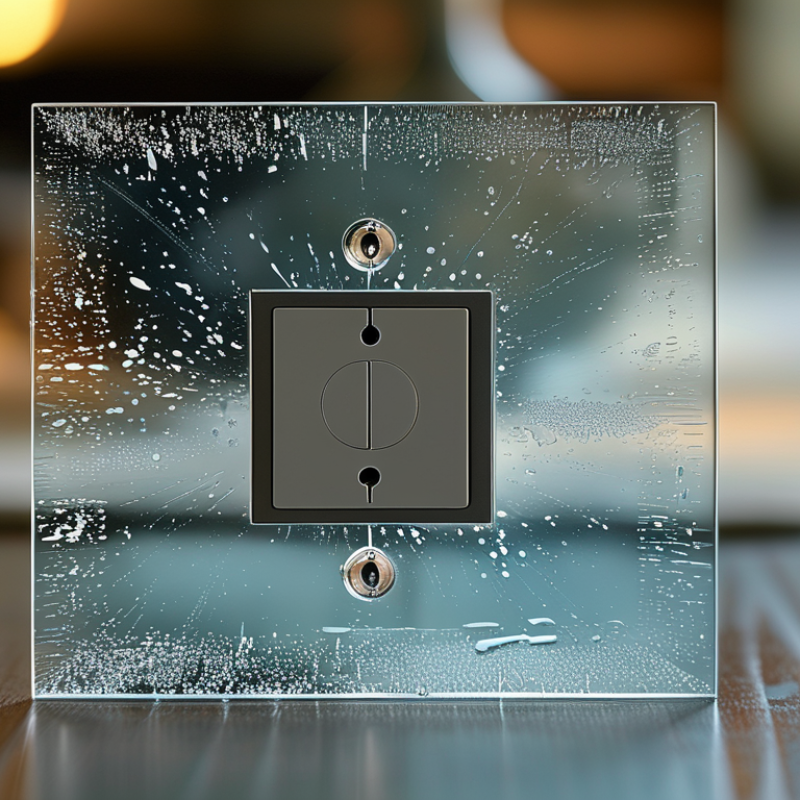
Understanding Smart Switch Cover Glass Types and Applications
How to Choose Smart Switch Cover Glass for Global Buyers?
Smart switch cover glass comes in several types, and each suits a different application. Tempered glass offers good impact resistance for homes, offices, and hotels. Chemically strengthened glass can support thinner designs and curved edges. Laminated glass adds a safety layer when breakage control matters. However, glass alone does not determine quality.
For touch switches, surface finish is important. Anti-fingerprint coatings keep frequently used panels cleaner. Anti-glare treatment improves visibility near windows or strong ceiling lights. Clear glass supports bright icons, while tinted glass creates a darker, premium appearance. In humid rooms, buyers should check coating durability, edge sealing, and resistance to cleaning chemicals. A sample may look perfect, yet its touch response can weaken after repeated wiping. That possibility deserves testing.
Tips: Confirm thickness, corner radius, cutouts, ink alignment, and adhesive compatibility before production. Test the cover with the actual switch module, not a similar sample. Check temperature, humidity, impact, and surface-wear performance. Ask for inspection records and material specifications. Local electrical and safety requirements may also differ between markets, so technical documents should be reviewed by qualified professionals. Small details matter. A two-millimeter opening error can affect installation and appearance. In my experience, buyers often focus on glass clarity first, then discover that fingerprint resistance or edge strength matters more during daily use.
Comparing Suppliers, Certifications, Costs, and Production Capabilities
Global buyers should judge smart switch cover glass by the complete supply chain, not by a low quotation. The International Data Corporation’s 2024 Worldwide Smart Home Device Tracker forecast about 892 million device shipments worldwide. That scale increases pressure on stable glass supply. Ask suppliers for ISO 9001 certification, process records, and recent audit evidence. The ISO Survey 2022 recorded more than 1.2 million ISO 9001 certificates globally, but certification alone does not prove optical quality.
Production capability needs physical proof. Request samples showing thickness tolerance, edge quality, surface hardness, light transmittance, and fingerprint resistance. A reliable factory should explain chemical strengthening, CNC cutting, printing alignment, cleaning, and automated inspection. Check whether it can maintain the same black border after repeated batches. Small color shifts become obvious beside a white wall switch. Capacity claims can be optimistic. Review monthly output, equipment lists, yield rates, and traceability codes.
Cost comparisons should include tooling, protective film, packaging, breakage, inspection, shipping, and import duties. The International Energy Agency reports that buildings account for roughly 30% of global energy demand, supporting continued investment in connected controls. Yet smart features do not justify careless glass selection. Confirm applicable RoHS and REACH documentation, plus electrical safety requirements for the finished switch. I would also test three production lots, not one. It takes longer. It may prevent an expensive assumption.
Planning Global Procurement, Customization, and Quality Control
How to Choose Smart Switch Cover Glass for Global Buyers?
Planning Global Procurement, Customization, and Quality Control
Global procurement starts with a clear technical brief, not a beautiful product photo. Define glass thickness, dimensions, corner radius, surface finish, transparency, and cutout locations. Small errors can affect touch sensitivity or installation. Request a controlled sample before approving mass production. Keep the approved sample, drawing, and inspection limits together.
Customization often involves silk-screen colors, printed symbols, coatings, and unusual panel shapes. Ask whether each feature can remain stable after heat, humidity, cleaning, and repeated handling. A supplier should explain its process, equipment, tolerance range, and testing records. Clear communication matters when teams work across time zones. Use drawings with measured data, not descriptions such as “slightly rounded.”
Quality control needs checks at several stages. Inspect raw glass, processed edges, printed surfaces, dimensions, and packaging. Test for scratches, chips, color variation, and poor alignment. A third-party inspection can verify random cartons before shipment. It cannot replace process control. No inspection plan is perfect. A polished sample may still hide production variation, especially with complex customization. Build an adjustment stage into the schedule and budget. That is not wasted time; it can prevent larger losses later. Packaging deserves attention too. Separate each cover with soft material, then test cartons for vibration and stacking pressure.
How to Choose Smart Switch Cover Glass for Global Buyers?
Planning global procurement, customization, and quality control through practical acceptance targets for smart switch cover glass.
These benchmark targets are commonly specified during supplier qualification and incoming inspection. Actual limits should be adjusted according to glass thickness, printing, coating, touch-sensor design, destination-market regulations, and the buyer’s approved technical specification.


 Your message must be between 20-3,000 characters!