logo

How to Choose the Best Hdpe Cutting Board Material for Your Needs?

When it comes to choosing the best Hdpe Cutting Board Material, the options can be overwhelming. HDPE, or high-density polyethylene, is a popular choice among both home cooks and professional chefs. Its durability and resistance to stains make it an ideal material for food preparation. However, not all HDPE cutting boards are created equal.

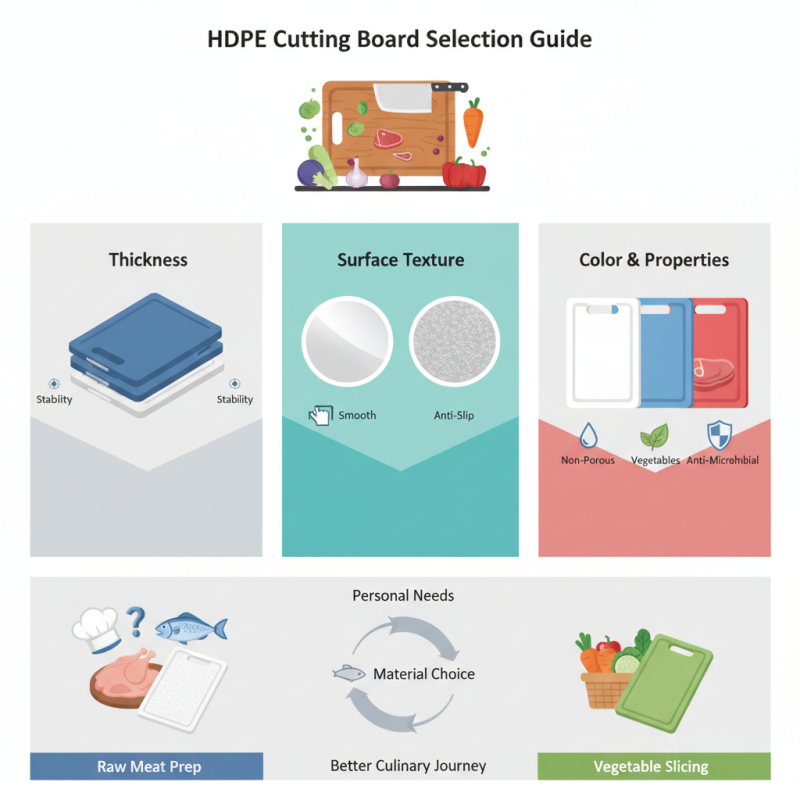
Different factors influence the choice of HDPE cutting board material. The thickness, surface texture, and color can impact both performance and safety. A thicker board may offer better stability, while a textured surface can help prevent slipping. Additionally, some boards may be treated with antimicrobial properties, enhancing food safety.

It’s crucial to consider your specific needs. For example, if you frequently chop raw meat, a non-porous board is essential. In contrast, if you mainly slice vegetables, a softer surface may work well. Reflecting on personal needs is vital. Misjudging the right fit can lead to frustration in the kitchen. Therefore, understanding the nuances of HDPE cutting board material can lead to better choices in your culinary journey.

How to Choose the Best Hdpe Cutting Board Material for Your Needs?

Understanding HDPE: Properties and Benefits as a Cutting Board Material

HDPE, or high-density polyethylene, is a widely used material for cutting boards. Its properties make it suitable for both home cooks and professional chefs. One of the standout features of HDPE is its durability. It withstands heavy use without cracking or warping. This toughness is essential in a busy kitchen.

Another benefit is its non-porous surface. This feature helps prevent bacteria from hiding in cracks. Cleaning is straightforward; warm, soapy water is usually enough. However, some may find that it scratches over time, affecting its appearance. These scratches can harbor bacteria if not maintained properly.

When considering HDPE, think about your needs. If you often prepare raw meat, its non-absorbent nature is crucial. On the other hand, you may prefer wood for aesthetic reasons. Each material has pros and cons. Reflecting on how you use your cutting board can guide your choice effectively.

Evaluating Different Grades of HDPE for Cutting Board Performance

When assessing HDPE cutting board materials, it's essential to consider the different grades available. High-density polyethylene (HDPE) is known for its durability and resistance to scratches. However, not all HDPE is created equal. Some grades may be more suitable for specific kitchen tasks than others.

For example, a thicker HDPE cutting board may offer better resistance to warping and is less likely to show knife marks. A board with a textured surface can provide a better grip, preventing slipping during use. The color and clarity of the HDPE can also matter. Darker colors might hide stains better, while lighter colors can indicate when the board needs cleaning.

Additionally, consider the board's intended use. If you prepare raw meats, a higher-grade HDPE may be necessary to minimize bacteria growth. Lower grades may feel less sturdy or fail to perform under heavy usage. Choosing the right grade involves not just the specs but also the intended cooking style. Reflect on your cooking habits to find a balance between performance and durability.

Comparing HDPE with Other Cutting Board Materials: Pros and Cons

When comparing HDPE cutting boards with other materials, it's crucial to consider their unique advantages and disadvantages. High-Density Polyethylene (HDPE) is favored for its durability and resistance to moisture. Studies show that HDPE boards can reduce bacteria growth by up to 99% during cleaning (Journal of Food Protection, 2017). This material is non-porous, which helps prevent the absorption of food particles and odors.

In contrast, wooden boards are often lauded for their aesthetic appeal. However, they can harbor bacteria if not maintained properly. They may require oil treatments to maintain their surface, which includes an extra level of care that many users overlook. Furthermore, wooden boards can sometimes warp or crack, leading to potential hazards during food preparation.

Glass and ceramic boards offer excellent hygiene due to their non-porous surfaces. Yet, their hard surfaces can dull knives quickly, requiring more frequent sharpening. In contrast, HDPE cutting boards provide a balance between knife friendliness and hygiene. They are lightweight, easy to clean, and can be safely put in the dishwasher. While each material has its pros and cons, the selection ultimately depends on your cooking style and maintenance preferences.

Factors to Consider When Choosing the Right HDPE Cutting Board Size

Choosing the right size for your HDPE cutting board is crucial for both comfort and functionality. A well-sized board can make food preparation easier, while an ill-suited one can create challenges. Consider how much space you have in your kitchen. If counter space is limited, a smaller board may be the best choice. Conversely, larger boards provide ample room for cutting and chopping.


Another factor to keep in mind is the type of food you prepare. A small board might suffice for simple tasks, like slicing fruits. However, larger, more complex meals require ample cutting space. Think about your typical meal prep. Are you working with whole chickens or large vegetables? If so, go for a bigger board.


Reflect on your cooking habits. An oversized board can be cumbersome if you often prepare small quantities. It's essential to find a balance. A cutting board that matches your cooking style enhances efficiency. Don’t rush the decision. Take your time to pick the right size for your unique kitchen needs.

Maintenance Tips for Longevity of HDPE Cutting Boards in the Kitchen

HDPE cutting boards are a popular choice for home cooks and chefs alike. To ensure their longevity, proper maintenance is essential. Regular cleaning is the first step. Hot, soapy water works well. Scrub gently to remove food particles and stains. Rinse and dry immediately to prevent moisture retention.

Storage matters too. Avoid stacking heavy items on the board. This can warp its shape. Instead, store it flat in a dry area. If you notice scratches or grooves, sand the surface lightly. This not only refreshes the board but also prevents bacteria buildup.

Periodic oiling is an often overlooked step. Though HDPE is durable, a food-safe mineral oil can enhance its surface. Apply it sparingly with a cloth. Remember, less is more here. It’s easy to overdo it, leading to an unintended greasy feel. Be mindful of how you use and care for your boards. With a little effort, they can last for years, making every meal prep a breeze.

How to Choose the Best Hdpe Cutting Board Material for Your Needs? - Maintenance Tips for Longevity of HDPE Cutting Boards in the Kitchen

Dimension Description Benefits Maintenance Tips
Thickness Ranges from 0.5 to 2 inches Durability and resistance to warping Avoid exposing to high heat
Surface Texture Smooth or textured options Better grip and food safety Regularly sanitize with mild bleach solution
Color Variety of colors available Can help avoid cross-contamination Use separate boards for different food types
Weight Lightweight for easy handling Convenient for everyday use Do not drop or bang against hard surfaces
Shape Rectangular, oval, and round Versatility for different kitchen tasks Store flat to maintain shape