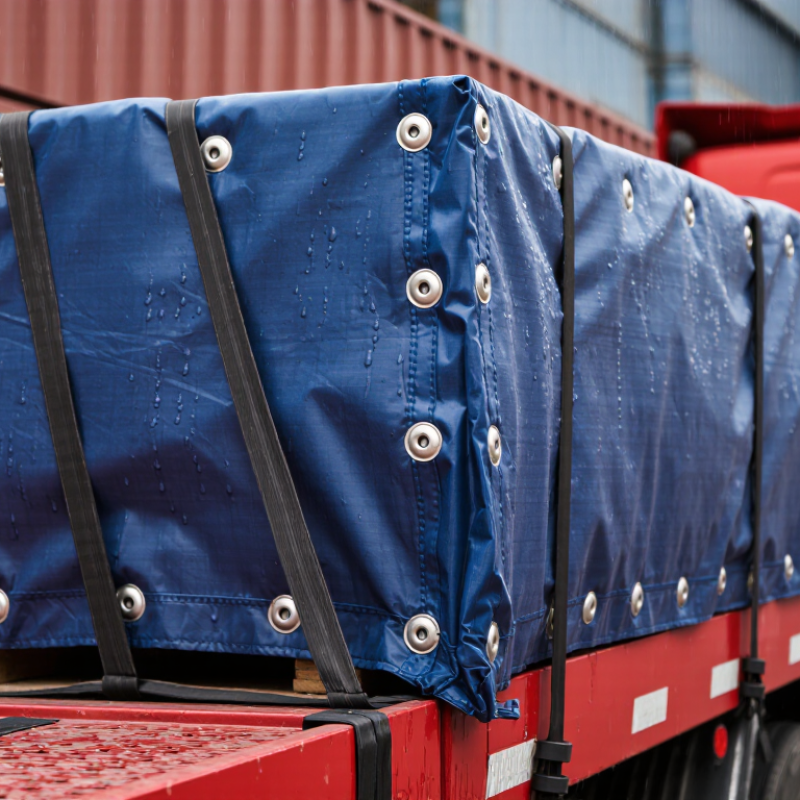
| What a shipping tarp is | A flexible protective cover made from coated or woven material, often finished with reinforced edges and attachment points. | Covering cargo during storage or transport, including loads carried on flatbed vehicles. | Helps shield cargo from rain, dirt, and some exposure to sunlight when correctly selected and secured. | Choose the material and construction for the cargo, transport method, weather exposure, and handling conditions. |
| PE (polyethylene) tarp | Woven polyethylene fabric, commonly laminated or coated; specifications vary by product. | General-purpose outdoor covering and temporary protection for packaged or stored goods. | Typically lightweight, flexible, and easy to handle. | Confirm fabric weight, coating, edge reinforcement, UV resistance, and whether the tarp is intended for repeated transport use. |
| PVC-coated polyester tarp | Polyester fabric coated with polyvinyl chloride (PVC); may include reinforced hems and welded seams. | Reusable covers for transport and industrial applications where a tougher, more durable cover is required. | Can provide a durable, water-resistant cover; performance depends on fabric, coating, seams, and workmanship. | Check finished weight, coating thickness, seam construction, flexibility in the expected temperature range, and repair options. |
| Canvas tarp | Woven fabric, commonly cotton or a cotton blend; treatments and water resistance differ by product. | Selected cargo or equipment covers where a breathable woven cover is suitable. | Breathability can help reduce trapped condensation compared with some non-breathable covers. | Check treatment, water resistance, drying requirements, and suitability for the cargo and expected weather. |
| Flatbed cargo tarp | Heavy-duty cover configured to suit a load and vehicle; may include reinforced corners, flaps, straps, or grommets. | Covering freight on open flatbed trailers, subject to the carrier’s securement procedures. | Can be selected or configured to cover different load shapes and exposure areas. | Measure the load and account for the cover’s drop, overlap, and fastening method; follow applicable cargo-securement rules. |
| Size and fit | Available dimensions vary; custom sizes may be specified by finished length and width. | Matching a tarp to cargo, palletized goods, equipment, or a vehicle deck. | A suitable fit can reduce uncovered areas and make securement more practical. | Confirm finished dimensions, tolerance, required overlap, corner shape, and whether measurements refer to the cut size or finished size. |
| Edges and attachment points | Common details include hemmed edges, grommets, D-rings, webbing, or sewn or welded reinforcements. | Providing points for tying down or tensioning a cover. | Reinforced details can help distribute tension when properly designed and used. | Check spacing, material, reinforcement, and compatibility with the planned ropes or straps; avoid excessive or uneven tension. |
| Weather and UV exposure | Resistance depends on the base fabric, coating or treatment, seams, and product specification. | Outdoor transport or storage in changing weather conditions. | The appropriate specification can help protect cargo from environmental exposure. | Ask for the stated water-resistance and UV-resistance properties, test basis if available, and any care or service-life guidance. |
| Safety and cargo securement | A tarp is a cover, not a substitute for load restraint or vehicle securement equipment. | Used alongside suitable tie-downs and the carrier’s approved securement method. | Proper covering can protect cargo while allowing the load to be secured separately. | Follow local transport regulations and carrier procedures; ensure the cover cannot loosen, obstruct visibility, or create a road hazard. |
| Global sourcing checks | Requirements can include material details, finished dimensions, color, packaging, labeling, and inspection criteria. | Comparing products for import, distribution, or project procurement. | Clear specifications make quotations and sample evaluation easier to compare. | Request a written specification, confirm sample approval and tolerances, and verify packing, shipping terms, and applicable import requirements. |


 Your message must be between 20-3,000 characters!