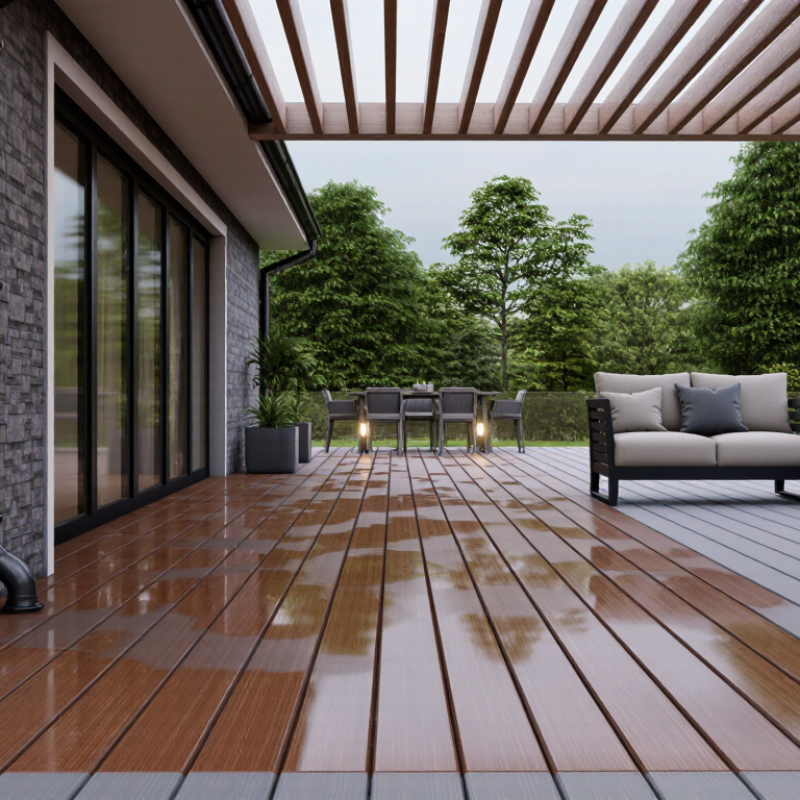
| Solid PVC decking | Does not contain wood fibers and does not absorb water like wood-based boards. Board joints still allow water through unless the deck uses a separate waterproofing system. | Rainy, humid, coastal, and poolside settings; suitable where moisture resistance is a priority. | Periodic washing; inspect fasteners and clear debris from gaps. | Strong resistance to moisture, rot, and insect damage; no routine staining or sealing. | Can become hot in direct sun; appearance, stiffness, and movement vary by product and installation conditions. | Low-maintenance decks, damp locations, and areas near pools or water. |
| Capped composite decking | A protective polymer cap helps limit water absorption and staining. The board core is still composite, so it should not be treated as a waterproof deck membrane. | Most climates, including wet areas; follow the product’s temperature and installation guidance in regions with large seasonal swings. | Clean with water and an appropriate mild cleaner; avoid leaving leaves and dirt trapped on the surface. | Wood-like appearance with lower upkeep than most natural wood; cap improves resistance to moisture and surface stains. | Can retain heat; board expansion, ventilation, drainage, and approved fasteners matter. | Residential decks where appearance and reduced maintenance are both important. |
| Uncapped composite decking | Wood-plastic composite can absorb some moisture, particularly through exposed ends and cut edges; it is generally more moisture-resistant than untreated wood but is not waterproof. | Covered or moderately exposed areas with good drainage; check suitability for persistently wet conditions. | Regular cleaning and debris removal; follow the manufacturer’s care instructions. | Uses wood fibers and plastic; avoids many of the recurring staining and sealing tasks associated with wood. | More vulnerable to moisture-related staining or deterioration than capped products if water sits on or enters the boards. | Budget-conscious projects in areas where standing water can be avoided. |
| Pressure-treated lumber | Preservative treatment helps protect against decay and insects, but the wood remains absorbent and is not waterproof. | Many climates when installed with suitable drainage and maintained; use locally appropriate treatment and hardware. | Allow new lumber to dry as needed, then apply a compatible water-repellent finish or stain and maintain it periodically. | Widely available, easy to cut, and often a lower initial-cost option. | Can check, warp, or split as it dries; ongoing finish maintenance is usually needed. | Cost-sensitive projects where the owner is comfortable with periodic upkeep. |
| naturally durable hardwood | Some species resist decay better than many common softwoods, but wood still absorbs water and benefits from good detailing and ventilation. | Outdoor use when the selected species is suitable for local exposure and installed with appropriate gaps and corrosion-resistant fasteners. | Clean periodically; oil or other finish is optional for color retention but may require repeat application. | Natural appearance and, for suitable species, good durability in outdoor conditions. | Species vary; some boards are heavy, hard to work, or costly. Surface weathering and color change are normal without finish maintenance. | Premium natural-wood decks where appearance is a priority. |


 Your message must be between 20-3,000 characters!