logo

What Is the Best Straw Tableware from China?

Choosing the best straw tableware from China requires more than comparing prices or attractive product photos. Buyers should examine material safety, manufacturing consistency, and the supplier’s ability to meet food-contact requirements. This matters for restaurants, schools, hotels, catering companies, and retailers serving hot meals every day.

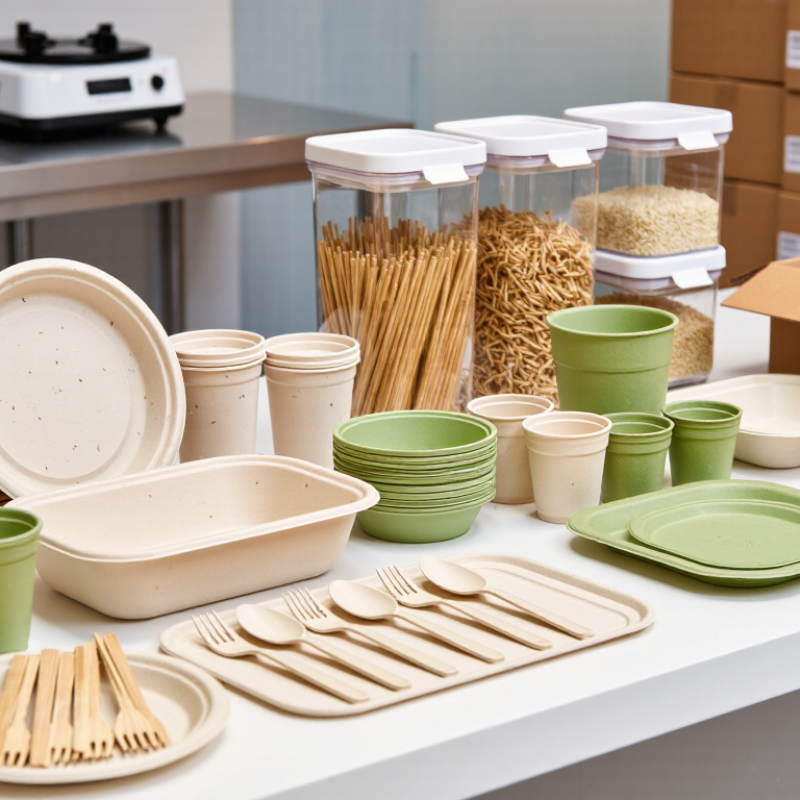
The phrase “Straw Tableware Tableware” may sound repetitive, but it reflects a growing category with several material options. Some products use wheat straw fiber blended with food-grade polymers. Others combine plant fibers with bamboo, rice husk, or recycled materials. Each formula behaves differently under heat, moisture, washing, and repeated handling. A plate that feels sturdy at room temperature may soften near boiling soup. Small details matter.

Look closely at the rim, surface finish, weight, and stacking design. Ask whether the supplier provides material specifications, migration test reports, factory quality procedures, and batch traceability. Reliable manufacturers should explain their molding process clearly. They should also identify limits for microwave use, dishwasher cleaning, and direct contact with oily foods.

Factory experience can help, but it does not guarantee perfect results. Samples may look excellent while later batches vary slightly in color or thickness. That possibility deserves honest attention. Buyers should test several production samples, not only one promotional piece. They should also confirm packaging strength, carton labeling, and delivery records before placing a large order.

China offers broad manufacturing capacity and customization options. Yet the “best” choice depends on the final application, target market, and compliance needs. A responsible evaluation balances appearance, durability, documentation, and supplier communication. Sometimes, the cheapest option is not the most economical one.

What Is the Best Straw Tableware from China?

What Is Straw Tableware and How Is It Made in China?

What Is the Best Straw Tableware from China?

Straw tableware usually contains wheat straw fiber, rice husk, bamboo fiber, or similar plant materials. In China, manufacturers clean and dry agricultural residues before grinding them into fine powder. The powder is then blended with a food-contact binder and molded under controlled heat and pressure. Workers trim the edges, inspect surfaces, and test dimensions. Some products are reusable and dishwasher-safe. Others are designed for short-term use. The label matters.

“Straw” does not always mean plastic-free. Some products combine plant fiber with polypropylene or another polymer. This can improve strength but may reduce compostability. Fortune Business Insights valued the global biodegradable tableware market at about USD 4.65 billion in 2023. Its report projects continued growth through 2032. That growth reflects demand, not automatic quality. Material composition, migration testing, heat resistance, and manufacturing traceability still require careful review. A supplier’s certificate alone may not answer every question.

Tips: Request the full material formula, not only the product name. Ask for food-contact test reports from an accredited laboratory. Check whether the item suits hot soup, microwaves, or dishwashers. Inspect a sample for rough edges, odor, warping, and uneven color. I would also question vague compostable claims. They are easy to print and harder to verify. A small sample test can reveal more than polished catalog photos.

Which Materials Are Used in Chinese Straw Tableware?

What Is the Best Straw Tableware from China?

Chinese straw tableware is not always made from straw alone. In many products, wheat straw fiber is blended with food-grade polypropylene for strength and moisture resistance. Some manufacturers use rice husk, bamboo fiber, corn starch, or sugarcane bagasse. These materials create different textures, colors, and heat tolerances.

PLA is another option. It comes from plant-based sources and may suit certain disposable applications. However, PLA usually needs controlled industrial composting conditions. It may not break down in a home compost bin. The word “biodegradable” can be confusing. Material composition matters more than the label.

Tips: Check the full material list, intended temperature range, and food-contact documentation. Rub the surface gently. A strong chemical smell, loose fibers, or rough edges deserves attention. For microwave use, verify the instructions instead of guessing. I have found that lighter products are not always weaker, but thin rims can crack sooner. That detail is easy to miss.

For reusable tableware, a wheat straw and polypropylene blend often offers practical durability. Fiber-rich products may feel more natural, yet they can absorb moisture if poorly sealed. Bamboo and rice husk pieces can show small color variations, which are not automatically defects. Still, uneven surfaces may collect food residue. Manufacturing quality remains important. Two products with similar materials can perform very differently.

How to Compare Quality, Safety, and Durability

Choosing the best straw tableware from China requires more than comparing prices. “Straw” usually means wheat-straw or plant-fiber material blended with food-safe polymers. Ask for the exact composition, not a vague claim about natural materials. Look closely. A reliable supplier should provide recent food-contact test reports from an accredited laboratory, including migration results, heavy-metal screening, and microbial safety data. Match each report to the actual product and production batch.

Quality appears in small details. Inspect the rim for sharp flashing, uneven coloring, or trapped fibers. A smooth surface should not feel waxy or release a strong chemical odor after washing. Check whether the spoon bends evenly and whether the plate stays flat on a table. Request samples from different batches. One attractive sample proves very little. It is also useful to test staining with tomato sauce, because pale plant-fiber products can discolor quickly.

Durability depends on use, heat, and cleaning habits. Test a cup with warm water, repeated dishwasher cycles, and a controlled drop from table height. Record cracks, warping, fading, and changes in texture. Some products survive ordinary meals but fail in microwaves or commercial dishwashers. Do not assume “dishwasher safe” means unlimited durability; ask for temperature and cycle limits.

I have seen comparison checks miss lid fit and edge wear. That was a reminder to inspect the boring parts, too. Reliable purchasing also requires clear batch identification, written care instructions, and a process for handling defects.

Which Chinese Straw Tableware Suits Different Uses?

What Is the Best Straw Tableware from China?

Which Chinese Straw Tableware Suits Different Uses?

Chinese straw tableware is not one single material. Many products use wheat-straw fiber blended with plant starches or other food-safe binders. For dry snacks, fruit, and short meals, molded fiber plates are practical, light, and easy to stack. For soup or oily food, choose thicker products with verified water and heat resistance. Heat changes everything. Check the stated temperature before using microwaves or ovens.

For offices, school events, and outdoor catering, lightweight bowls and compartment trays can reduce transport weight. However, “natural” does not automatically mean compostable. The European Bioplastics market data report estimated global bioplastics production capacity at 2.18 million tonnes in 2023, but this figure covers many applications, not only tableware. The OECD Global Plastics Outlook reported 353 million tonnes of plastic waste in 2019, with only 9% recycled. These figures support better material choices, but they do not prove every straw product is sustainable.

Tips: Ask Chinese suppliers for food-contact test reports, migration results, heat limits, and coating details. Request samples with hot soup, oil, and a 30-minute water test. Confirm whether “compostable” means home composting or industrial treatment. Ask for evidence. A cheaper plate may soften quickly. I would also inspect odor, edge strength, and surface cracks before placing a large order. Mistakes happen, especially when marketing language replaces technical data.

What Is the Best Straw Tableware from China? - Which Chinese Straw Tableware Suits Different Uses?

Tableware Type Typical Material Structure Best-Suited Uses Key Advantages Main Limitations Microwave & Dishwasher Guidance Overall Suitability
Wheat-straw fiber composite Wheat-straw powder or fiber combined with a thermoplastic resin, commonly polypropylene (PP). Everyday plates, bowls, cups and lunch containers for homes, schools and offices. Lightweight, reusable, relatively impact-resistant and usually more affordable than fully molded fiber products. The finished item is generally not fully biodegradable because it contains plastic resin; heat limits depend on the resin and product design. Use only when the product is specifically labeled microwave-safe and dishwasher-safe. Follow the supplier’s temperature limit. Best all-purpose option
Rice-husk fiber composite Rice-husk powder or fiber blended with a polymer binder, often PP or another food-contact plastic. Reusable meal sets, serving bowls and lightweight tableware for daily dining. Uses an agricultural by-product, has a natural-looking appearance and offers good rigidity when properly molded. Performance varies significantly with the binder and fiber ratio; “natural” appearance does not automatically mean compostable. Microwave and dishwasher use should be based on the exact product certification and care instructions. Best for daily reusable dining
Bamboo-fiber composite Bamboo fiber or powder combined with a resin or thermoplastic binder; composition differs by product. Cups, plates and snack bowls where a wood-like texture and appearance are preferred. Attractive natural appearance, low weight and good stiffness for ordinary room-temperature foods. Some products are not suitable for high heat; fiber-resin composites should not be assumed to be biodegradable or melamine-free. Avoid microwave use unless explicitly approved. Hand washing is often the safer choice when instructions are unclear. Best for style-focused everyday use
Bagasse molded fiber Molded sugarcane bagasse pulp, usually without a conventional plastic structure when made as fiber foodservice ware. Takeaway meals, catering, parties and short-term foodservice applications. Lightweight, suitable for disposable service and commonly available in plates, trays, clamshells and bowls. Limited reuse, lower resistance to prolonged liquid exposure and possible softening with very wet foods over time. Some products tolerate brief heating, but microwave approval must be confirmed. Usually not intended for repeated dishwasher cycles. Best for disposable foodservice
Wheat-straw molded pulp Pulp made from wheat-straw residues, molded into plates, bowls or trays; may include additives or a coating. Events, institutional catering and short-duration serving of dry or moderately moist foods. Renewable agricultural-fiber feedstock, low weight and a paper-like disposable format. Water, oil and heat resistance depend on the coating; coated products may not be suitable for home composting. Use only according to the printed instructions; disposable pulp products are generally not intended for dishwasher reuse. Best for eco-oriented events
Corn-starch or PLA-based tableware Starch-derived bioplastic or polylactic acid (PLA), sometimes blended with other materials or used as a coating. Cold foods, desserts, salads, sampling and controlled foodservice programs with suitable waste collection. Can provide a plastic-like finish while supporting specific industrial-composting programs. PLA commonly has limited heat resistance; compostability depends on certified materials and access to an appropriate industrial facility. Usually unsuitable for hot foods or microwave use unless clearly certified. Not generally designed for repeated dishwasher use. Best for cold-food sustainability programs
Natural bamboo tableware Solid bamboo or laminated bamboo, sometimes finished with a food-contact coating. Dry snacks, bread, fruit, serving platters and decorative dining presentations. Distinctive appearance, lightweight construction and good presentation value. Can absorb moisture, may crack or warp if soaked, and is usually less suitable for acidic or very wet foods during long service. Do not microwave. Hand wash and dry promptly unless the product documentation states otherwise. Best for serving and presentation
Straw-fiber cutlery with a polymer binder Agricultural fiber, such as wheat straw or rice husk, blended with a food-contact polymer and molded into forks, spoons or knives. Takeaway meals, packed lunches, cafeterias and outdoor events. Lightweight, stackable and more durable than many uncoated paper alternatives. Not necessarily compostable; thin sections may flex or break with hard foods, and high heat can reduce strength. Generally intended for single use or limited reuse. Follow the stated temperature and food-contact requirements. Best for portable meals
Selection note: The most suitable option depends on the use case. Choose a fiber-polymer composite for durable everyday reuse, molded bagasse or wheat-straw pulp for short-term foodservice, PLA-based products for cold foods within a verified industrial-composting system, and natural bamboo mainly for dry-food serving. Always verify food-contact compliance, material composition, temperature limits and disposal claims for the specific product.

How to Choose a Reliable Straw Tableware Manufacturer

The best straw tableware from China is not chosen by color or low price. It is chosen through evidence. The OECD’s Global Plastics Outlook (2022) reported 353 million tonnes of plastic waste in 2019, while only 9% was recycled. This pressure makes plant-fiber tableware attractive, but “eco-friendly” alone proves very little.

A reliable manufacturer should explain the raw material clearly. Ask whether the product uses wheat straw fiber, starch, bamboo, or mixed fillers. Request batch records, moisture controls, and food-contact test reports for your destination market. Check migration testing, odor, heat resistance, and heavy-metal limits. ISO 22000-based food-safety systems can show process discipline, although certification cannot replace factory inspection. Small details matter. The rim should feel smooth, not sharp. A hot meal should not soften the plate within minutes.

Visit the production site, or arrange an independent audit. Review molding temperatures, drying rooms, warehouse cleanliness, and packaging protection. Ask for samples from different batches, not one perfect piece. Use a simple test: fill a bowl with hot soup, stack it, and check deformation after thirty minutes. Request quality records based on ISO 2859-1 sampling principles. The United Nations Environment Programme’s 2023 report states that plastic pollution could be reduced by 80% by 2040 through reuse, recycling, and better product design. That target increases the value of measurable improvements. Still, some suppliers may provide incomplete data. I would treat that as a warning, not a minor paperwork issue.

What Is the Best Straw Tableware from China?

A reliable straw tableware manufacturer should be evaluated through documented food-contact compliance, consistent quality control, material traceability, production capacity, and export readiness. The chart below presents a practical 100-point supplier evaluation model.

Prioritize suppliers that can provide current food-contact test reports, batch traceability, clear material specifications, quality inspection records, and stable lead times. Certification documents should be verified for the exact factory and product being purchased.