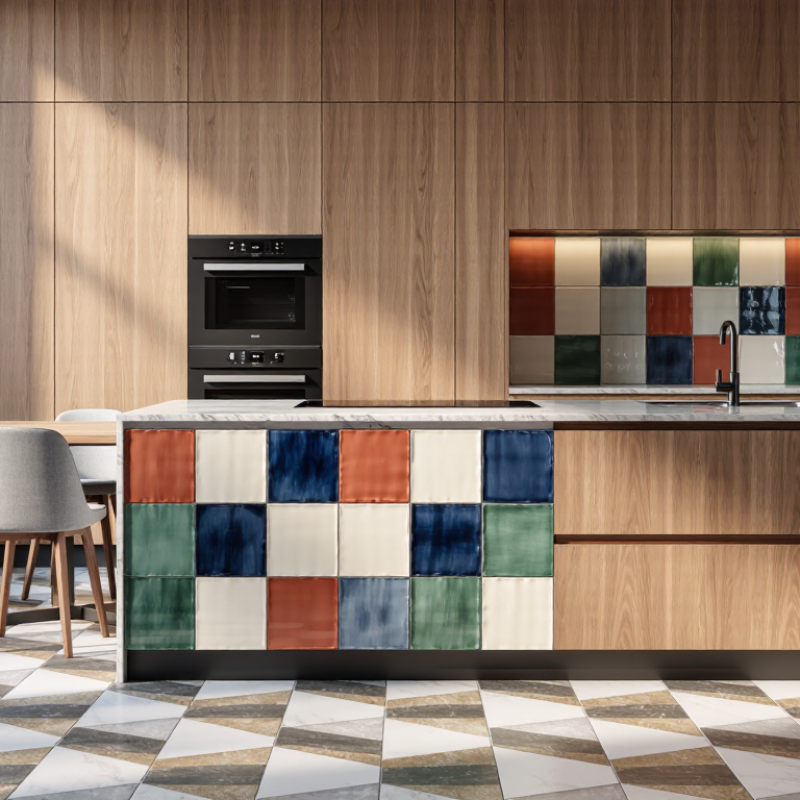
| Hand-painted ceramic | Fired clay or other ceramic body; body density and water absorption vary by product. | Painted decoration is usually covered by a clear or colored glaze and fired. | Tiles are shaped, decorated by hand, glazed, and kiln-fired. Small variations in pattern and color are normal. | Individual brushwork, illustrative motifs, and subtly varied color. | Glazed faces are generally easy to wipe clean. Check the tile’s stated suitability for wet areas and floors; some decorative finishes are intended for walls only. | Kitchen backsplashes, fireplace surrounds, feature walls, and accent panels. |
| Glazed ceramic | Clay-based ceramic body, often made by pressing or extrusion. | A fired glaze creates the color, pattern, and surface finish; available in matte, satin, or glossy options. | Formed, dried, glazed, and kiln-fired. Printed designs may be applied using ceramic inks before firing. | Broad range of colors, geometric designs, and imitations of other materials. | Care depends on the glaze and product rating. Glazed surfaces are usually straightforward to clean, but chipped glaze can reveal the body beneath. | Walls, backsplashes, and residential floors when the product is rated for floor use. |
| Porcelain with decorative surface | Dense ceramic body made from refined clays and other mineral materials; porcelain tile is commonly defined by water absorption of 0.5% or less. | May be glazed, polished, textured, or decorated with a surface print. | Pressed and fired at high temperatures. Decorative patterns can be printed onto the surface before firing. | Detailed repeats, stone-inspired graphics, and crisp contemporary patterns. | Low water absorption makes porcelain suitable for many demanding interior applications. Confirm slip resistance and the manufacturer’s installation guidance for the intended location. | Floors, walls, bathrooms, kitchens, and other areas where a porcelain product’s rating is appropriate. |
| Handmade zellige-style tile | Traditionally made from clay, with each piece shaped and finished individually. | Often covered with a colored glaze that can show tonal variation, pooling, or small surface irregularities. | Clay is shaped, dried, glazed, and fired; handmade pieces may be cut or adjusted before installation. | Reflective, richly varied surfaces with irregular edges and lively color shifts. | Variation in size, shade, and flatness is characteristic. A skilled installer may need to allow for uneven edges and use appropriate grout and setting methods. | Decorative walls, backsplashes, niches, and feature surfaces. |
| Glass mosaic tile | Colored or clear glass, commonly supplied as small pieces mounted on a mesh sheet. | Color may be within the glass, applied to its back, or created with a surface finish, depending on the product. | Glass is formed or cut into small units and assembled into sheets or patterns. | Bright color, translucency, reflective highlights, and fine-scale patterns. | The glass face is non-absorbent, but grout joints and the installation assembly still require suitable waterproofing where needed. Use compatible adhesives and grout. | Shower walls, pools, backsplashes, borders, and curved surfaces when the product is approved for the application. |
| Encaustic cement tile | Portland cement, mineral aggregates, and pigmented cement layers; it is not a ceramic tile. | Typically unglazed. The decorative pattern is formed from colored cement rather than a printed or glazed surface. | Pigmented cement is placed in a patterned mold, backed with cement, and hydraulically pressed; the tile cures rather than being kiln-fired. | Matte, tactile surfaces with geometric or traditional patterns and color extending below the surface. | Porous and generally requires sealing and careful cleaning. Follow product-specific guidance; acidic cleaners can damage cement-based surfaces. | Interior floors and walls in suitable settings, subject to the tile’s installation, sealing, and maintenance requirements. |
| Terracotta tile | Fired natural clay, often with a warm red, orange, or brown body. | May be left unglazed or finished with a glaze or protective treatment. | Clay is shaped, dried, and fired; handmade and machine-made versions are available. | Earthy color, natural texture, and visible variation between pieces. | Unglazed terracotta is generally porous and may need sealing. Suitability for wet areas, freeze-thaw conditions, or heavy traffic depends on the specific product and installation. | Rustic interior floors, wall accents, hearth surrounds, and sheltered outdoor areas when rated for the conditions. |


 Your message must be between 20-3,000 characters!