logo

2026 Top Jewelry Display Cases for Global Buyers

The 2026 Top jewelry display cases for Global Buyers guide examines how presentation, protection, and practical buying decisions now intersect. Global retailers need more than attractive furniture. They need cases that preserve visual clarity, support secure handling, and suit different store formats.

Martin M. Pegler, a respected visual-merchandising author, wrote, “Display is the silent salesperson.” His insight remains relevant. A well-designed jewelry display case directs attention without overpowering the jewelry. Clear low-iron glass can improve color accuracy. High-CRI LED lighting can reveal subtle gemstone tones. Soft interior materials can reduce scratching during daily merchandising.

Yet appearance alone is not enough. Buyers should examine lock quality, hinge strength, cable management, ventilation, and replacement-part availability. Modular cases may simplify future renovations. Anti-tarnish materials can help, but they do not replace proper humidity control. Small details matter. A poorly positioned spotlight can create glare across a diamond. A heavy case can increase installation costs and complicate international shipping.

This guide compares jewelry display cases for boutiques, department stores, exhibitions, and premium counters. It considers visibility, security, customization, maintenance, packaging, and long-term value. Product claims still require careful verification. Specifications can change. Supplier promises may sound impressive, yet service response often reveals the real difference.

No case is perfect. Some models prioritize elegance over flexibility. Others provide strong security but feel visually cold. Global buyers should balance these compromises against their floor plan, product mix, budget, and customer experience goals. The strongest choice is not always the most expensive one. It is the case that performs consistently, protects valuable pieces, and communicates quality at a glance.

2026 Top Jewelry Display Cases for Global Buyers

Types of Jewelry Display Cases for Different Retail and Exhibition Settings

2026 Top Jewelry Display Cases for Global Buyers
Types of Jewelry Display Cases for Different Retail and Exhibition Settings

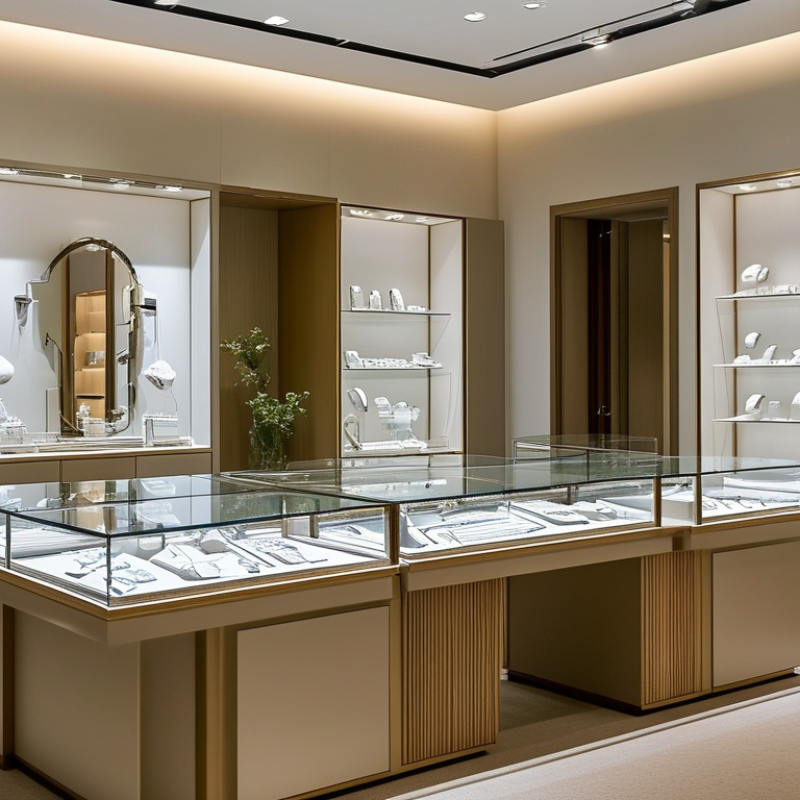
Jewelry display cases should match the selling environment, not only the product. A street-level boutique often needs counter cases with tempered glass, secure locks, and clear sightlines. These cases keep small items visible while protecting them from frequent handling. Adjustable lighting helps separate silver, colored stones, and polished gold tones. Keep it calm. Too much brightness can create glare and reduce perceived quality.

For shopping centers, freestanding tower cases use vertical space efficiently. They work well for collections, watches, and coordinated seasonal displays. Retail teams should check door clearance, cable access, and cleaning time before ordering. A case may look impressive in a showroom but feel awkward beside a narrow walkway. That mistake is common. Measure the real sales floor, including customer movement.

Exhibitions need lighter, modular cases that assemble quickly and travel safely. Lockable glass cubes suit individual pieces, while tabletop cases support demonstrations and close viewing. UV-resistant glazing can reduce light-related fading, especially for delicate materials. LED lighting with a high color-rendering level offers more dependable color judgment. Still, lighting tests should use the actual jewelry. Samples can mislead. Humidity control, stable bases, and replaceable fittings also matter for repeated events. Global buyers should request material specifications, packing details, and maintenance guidance in writing. A lower initial price may become expensive when hinges, lights, or panels fail during a busy exhibition.

Key Materials, Structures, and Protection Features

2026 Top Jewelry Display Cases for Global Buyers

Key Materials, Structures, and Protection Features

A reliable jewelry display case begins with material balance. Laminated glass offers strong visibility and better break resistance than ordinary glass. Acrylic is lighter, but it scratches more easily during cleaning. Polycarbonate handles impact well, although poor grades may yellow over time. Powder-coated aluminum or steel frames provide stable support without excessive weight. For interior surfaces, low-lint microfiber, treated wood, and inert foam reduce abrasion and unwanted chemical contact.

Structure matters as much as appearance. Buyers should inspect hinge alignment, lock placement, cable routing, and load-bearing joints. A narrow base can look elegant but may become unstable in crowded retail spaces. The 2023 National Retail Security Survey reported average retail shrink of 1.44% of sales. That figure is not caused by cases alone, but it supports stronger physical controls. Concealed hinges, laminated panels, and anchored plinths can reduce practical risks.

Protection also includes light, dust, humidity, and heat. The U.S. Department of Energy reports that LEDs use at least 75% less energy than incandescent lighting and last up to 25 times longer. Cooler LED modules can reduce heat near sensitive finishes. Canadian conservation guidance commonly places mixed-material displays near 30–50% relative humidity. Yet, this range is not universal. I would test each collection, especially with plated surfaces and natural materials. UV-filtering panels, gasketed doors, silica-gel compartments, and replaceable dust seals add useful protection. Small details matter. One overlooked seal can undermine an expensive case.

2026 Top Jewelry Display Cases for Global Buyers

This comparison uses representative material densities to estimate the mass of a 1 m² panel at 5 mm thickness. Lower panel mass can simplify transport and installation, while glass and aluminum generally provide stronger rigidity and premium structural performance.

For jewelry protection, buyers should evaluate laminated or tempered glazing, lockable structures, UV-filtering options, dust seals, impact-resistant panels, concealed hinges, and corrosion-resistant metal hardware.

How to Select Display Cases for Jewelry Types and Store Layouts

2026 Top Jewelry Display Cases for Global Buyers

How to Select Display Cases for Jewelry Types and Store Layouts

Choosing a display case starts with the jewelry, not the furniture. Rings need shallow trays, angled lighting, and clear viewing from above. Necklaces need vertical panels and discreet hooks. Bracelets need enough depth for natural curves. Earrings perform better on small, eye-level mounts. This sounds obvious. Many stores still mix every category together.

Grand View Research valued the global jewelry market at approximately USD 353 billion in 2023. Its report also projects about 6.9% annual growth through 2030. More value requires better presentation, but visual appeal cannot replace practical protection.

The World Gold Council reported global gold jewelry demand of roughly 1,877 tonnes in 2024. High-value pieces need laminated glass, controlled access, stable hinges, and strong internal lighting. Avoid harsh reflections. They hide fine details.

Store layout changes the specification. A narrow boutique benefits from wall-mounted cases and slim counters. Larger stores can use islands, but walking routes must remain open. I have found that customers often prefer cases around waist and chest height. Yet this is not universal. Older shoppers may need lower viewing angles, while luxury pieces often deserve a slower, seated inspection. Plan lighting below 3,000–4,000K for warm metals, then test it with actual merchandise. A perfect case does not exist. Prototype one section before ordering globally.

Customization, Branding, Lighting, and Security Considerations

2026 Top Jewelry Display Cases for Global Buyers

Customization should begin with the jewelry, not the cabinet. Measure necklace lengths, ring trays, and bracelet widths before choosing dimensions. A shallow drawer may suit rings, but it can strain larger pieces. Adjustable velvet inserts improve flexibility during seasonal product changes. I have seen attractive cases become impractical because staff could not restock them quickly. That mistake deserves more attention.

Brand Presentation & Lighting

Branding works best through restrained details. Use consistent colors, discreet logos, and materials that support the jewelry’s character. A matte surface can make polished stones appear brighter. Lighting needs equal care. Neutral LED lighting often shows metal tones accurately, while excessive brightness creates glare on glass. Test the case from customer eye level. Check it again under store lighting. Small differences matter.

Security & Accessibility

Security should protect products without making customers feel suspicious. Tempered glass, concealed locks, strong hinges, and anchored bases provide useful protection. For higher-value displays, consider access records and alarms that alert trained staff. Local safety requirements may differ, so buyers should confirm specifications with qualified professionals. I would not treat security as a final accessory. However, overbuilt cases can reduce accessibility and weaken the shopping experience. The balance is not perfect. It requires testing, staff feedback, and occasional redesign.

Global Purchasing Standards, Packaging, Shipping, and Supplier Evaluation

2026 Top Jewelry Display Cases for Global Buyers

Global buyers should evaluate jewelry display cases as retail equipment and export packaging. A case may look elegant, yet fail during vibration, humidity, or repeated handling. Use ISO 780 handling symbols and request ISTA-based transport testing. IATA reports that air cargo carries over 35% of global trade by value, so lightweight protection can reduce freight costs without sacrificing security. Check hinge strength, foam density, fabric colorfastness, lock alignment, and resistance to fine dust. Ask suppliers for measurable specifications, not attractive samples alone.

Tips: Request three samples from different production batches. Test each case after 48 hours in high humidity. Record scratches, odor, loose stitching, and lid movement. Packaging also affects purchasing decisions. The OECD’s Global Plastics Outlook reported 353 million tonnes of plastic waste in 2019. Therefore, buyers should request recyclable inserts, reduced mixed materials, and carton dimensions that limit empty space. A lower-plastic design is not automatically better if it breaks easily. That trade-off needs evidence.

Supplier evaluation should include factory audits, material declarations, quality-control records, and replacement policies. Confirm production capacity before placing seasonal orders. Ask how defects are classified and photographed. Payment terms, inspection timing, pallet stacking, and customs documents should be written clearly. A perfect pre-production sample can mislead. I have seen small adhesive failures become expensive returns. The best supplier is not always the cheapest; it is the one that measures problems honestly and corrects them consistently.